Understanding how liquidity shapes betting markets on platforms such as Unibet offers insight into why certain odds behave the way they do. Market liquidity, often overlooked by casual observers, plays a crucial role in determining the pricing, vig, and overall efficiency of a market. Sharp bettors consistently evaluate liquidity before committing funds, relying on it to assess market stability and identify potential value.
How Liquidity Shapes Pricing
Liquidity in betting markets refers to the volume of money wagered on a particular outcome. Markets with high liquidity typically offer more precise and competitive pricing. This occurs because the larger the number of participants and wagers, the more quickly prices adjust to reflect a consensus view of probability.
The influence of high liquidity becomes evident in major sports markets such as NFL point spreads or NBA totals. These markets attract significant wagering activity, resulting in narrower bid-ask spreads and more stable odds.
Efficient pricing derives from the principle that a high volume of wagers, particularly from informed participants, pushes the odds toward an equilibrium point. In this context, bookmakers adjust lines in response to the weight of money rather than individual opinions, gradually arriving at what is perceived to be a fair market price.
As prices converge toward this consensus, bookmakers reduce the vig, or house margin, since the risk of exposure diminishes. Markets that adjust swiftly and confidently tend to offer tighter spreads and are often less prone to large movements closer to the event.
Market Width as a Signal
Market width, the difference between odds on opposing outcomes, serves as a key indicator of liquidity. Tighter widths suggest strong liquidity and an efficient market, while wider widths imply the opposite.
For example, a spread of -110 on both sides corresponds to a 20-cent market width, considered favourable in competitive events. Wider spreads, such as -120 on each side, often appear in markets where liquidity is limited or uncertainty is higher.
Sharp bettors observe market width to assess the vig being charged and the confidence the bookmaker has in the line. A wide market may reflect risk aversion by the bookmaker or a lack of betting volume to support more refined pricing. Recognising these signals helps advanced bettors decide whether a market is suitable for analysis or participation.
The Role of Known Probabilities
In certain markets, efficiency is less a function of liquidity and more a result of the event structure. Outcomes with precisely known probabilities allow bookmakers to offer tighter pricing despite relatively low volume. The well-known Super Bowl coin toss prop serves as an example: although it does not attract the same volume as major match outcomes, the inherent 50-50 probability leads to narrower vigs, often around -105 on both sides.
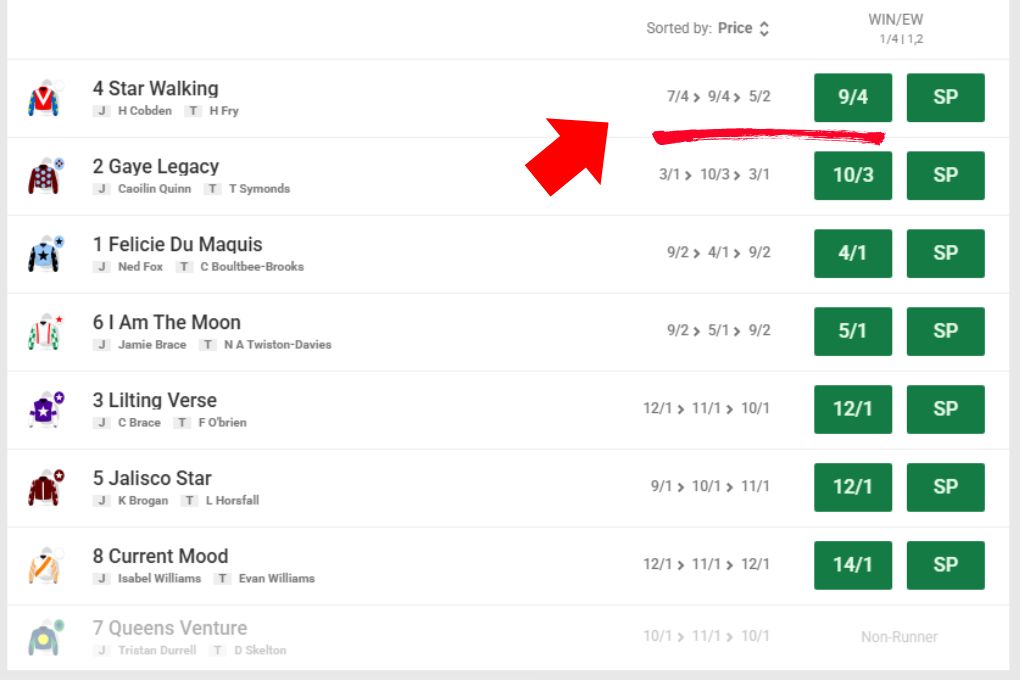
A similar principle applies to pricing in contexts where probabilities are mathematically driven. For example, horse race odds on some of the best online betting platforms often reflect a combination of market sentiment and parimutuel mechanisms, where the final payout is determined by the pool. Despite the fluctuating nature of these odds, the fact that bookmakers do not carry exposure encourages narrower pricing relative to other low-liquidity markets.
Illiquidity and Risk Management
Markets with low liquidity display greater inefficiencies and increased vig. This reflects the bookmaker’s need to manage risk in the face of limited information. Derivative or prop bets are typical of such markets. These bets receive lower volume, and their unique nature introduces pricing uncertainty.
Bookmakers mitigate this through wider spreads and tighter betting limits. For example, while a spread market might allow six-figure bets, player props may carry limits of just a few hundred.
Live betting presents an additional case. Since wagers occur during the game with limited time for price discovery, bookmakers expand the vig to protect against volatility. Odds in these settings often reflect a trade-off between immediacy and precision, with prices offered at -120 or more on each side. These wider spreads signal the reduced opportunity for market participation to influence prices within the brief windows available.
Alternative Models
Liquidity can be influenced by the structure of the market itself. In traditional sportsbook models, the bookmaker sets the odds and carries the associated risk. In contrast, peer-to-peer platforms and parimutuel systems remove this exposure by placing responsibility on the participants.
Betting exchanges often yield narrower spreads, and parimutuel systems, especially prevalent in racing, finalise odds from pooled stakes. These models demonstrate that liquidity is not a fixed feature but an outcome of how responsibility and risk are distributed. For sharp bettors, recognising these distinctions is essential. Understanding how market structures influence liquidity provides a foundation for interpreting odds and navigating markets with greater precision.
Related: What SP Means in Horse Racing (How it Affects Profits)