
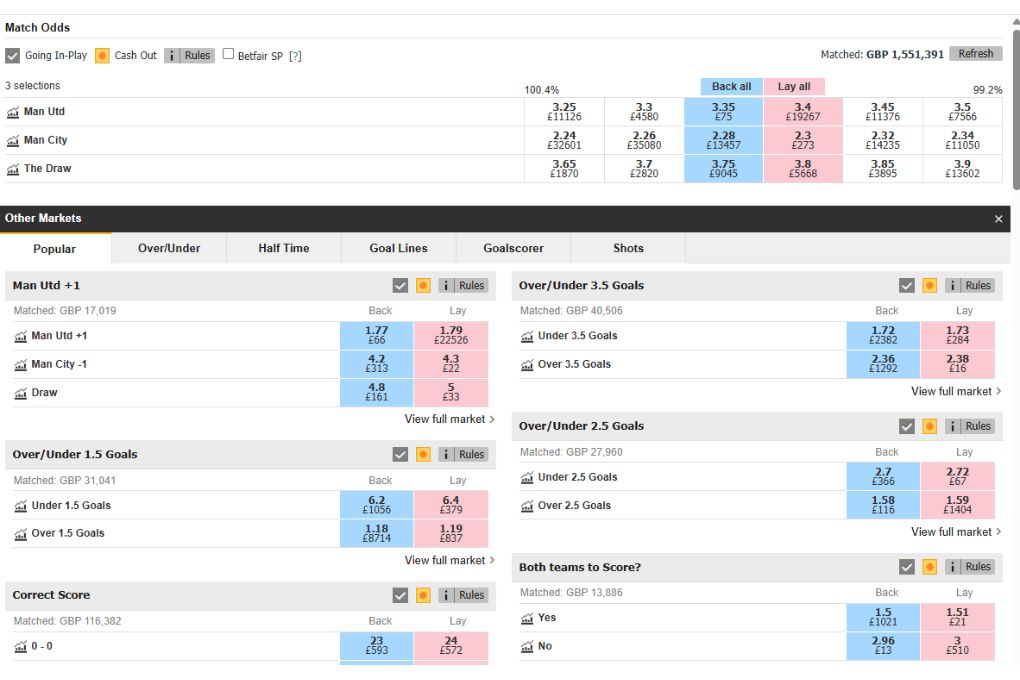
Betting exchanges work differently from traditional bookmakers and sportsbooks…
Instead of placing a bet against a company, you are betting against other users, with the exchange matching bets and charging a small commission.
This article explains how betting exchanges work, how the bets differ, and how odds are matched on an exchange. It is designed as a simple starting point for anyone new to exchange betting, before moving on to placing trades or choosing a platform.
What Is a Betting Exchange?
In simple terms, a betting exchange is an online betting platform where users bet against each other rather than against a company. Instead of the site setting the odds and taking the opposite side of a bet, the exchange simply matches players who want opposing outcomes.
There are several benefits to this…
When using a betting exchange, users can take one of two positions. They can back an outcome to happen, or they can lay an outcome to not happen. For every back bet placed, another user must be willing to take the opposite side of that bet. This often causes confusion for new users at first but it really doesn’t need to!
The exchange acts as an intermediary, matching bets and settling the market once the event is complete. Unlike bookmakers, the best betting exchanges do not build a margin into the odds. Instead, they generate revenue by charging a small commission on winning bets.
Once this concept is understood, other aspects such as trading, price movement, and lay betting become much easier to grasp. Also, it’s pretty easy to see how users can get a better price – because those on the other side, aren’t necessarily so smart.
How Betting Exchanges Work
Rather than betting against the platform itself, punters are betting against other players, with the exchange facilitating the transaction.
Each market contains two sides. Back bets are placed by users who believe an outcome will happen. Lay bets are placed by users who believe an outcome will not happen. When a back bet and a lay bet agree on the same odds and stake, the exchange matches them.
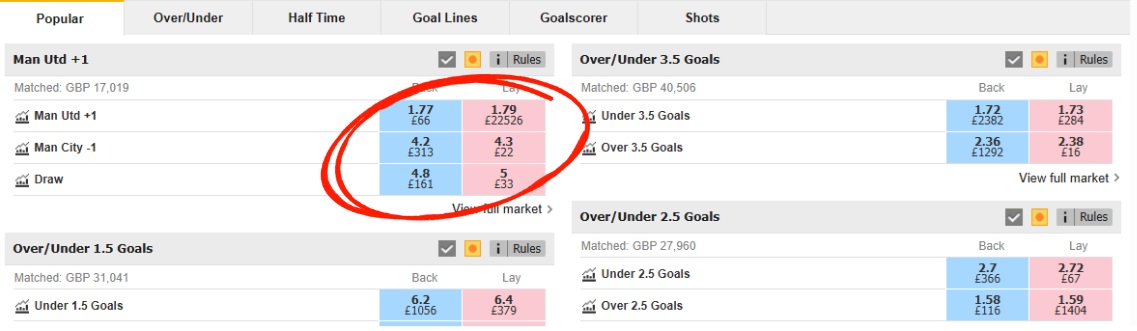
If no matching bet is available at the chosen odds, the bet remains open in the market. Other users can then choose to match it, or the odds can be adjusted to make a match more likely. This constant interaction is why exchange prices move frequently. It’s also why there is a monetary value between each of the odds – as shown in the image below.
Markets with higher activity tend to have more stable prices, while lower liquidity markets can move more sharply as money enters or leaves the market. At this stage, it is not necessary to know how to place a bet or manage a position. The key point is that betting exchanges function as open marketplaces rather than traditional betting firms.
If you want to see how this works in practice, this beginner’s guide shows exactly how to place your first bet or trade on a betting exchange.
Betting Exchange Odds (Explained Simply)
When you first look at an exchange market, the odds may seem unfamiliar. Betting exchanges use decimal odds, which show the total return for every £1 staked, including the original stake. For example, odds of 3.00 return £3 from a £1 bet if it wins.
If you are unfamiliar with decimal pricing, this guide explains how decimal odds work and how they compare to traditional formats.
Unlike bookmakers, exchange odds are not set by the platform. Prices are created by other users in the market, with available odds shown for both backing and laying outcomes. When opposing bets match at the same odds, the exchange confirms the bet. Because prices are driven by supply and demand, odds can move frequently as users place and remove bets. This market driven pricing is why exchange odds are often more competitive, particularly in high liquidity events.
The main takeaway is that exchange odds reflect live market opinion rather than a bookmaker margin built into the price. This is also why exchange pricing tends to be more transparent than bookmaker odds, which often include a built-in margin.
What to Do After Understanding How Betting Exchanges Work
Once you understand how betting exchanges work at a basic level, the next step depends on what you want to do next.
If you are new to exchange betting and want to see how everything works in practice, learning how to place your first bet or trade on an exchange is the logical progression. That is the core difference.
If you are deciding which platform to use, it is worth comparing the main betting exchanges available. Factors such as commission rates, market liquidity, and available features can vary significantly between providers.
You may also wish to explore more specific exchange concepts, such as lay betting or trading positions, before an event finishes. Each of these topics builds directly on the foundation covered in this guide and can be explored further through the related articles linked across the site.