
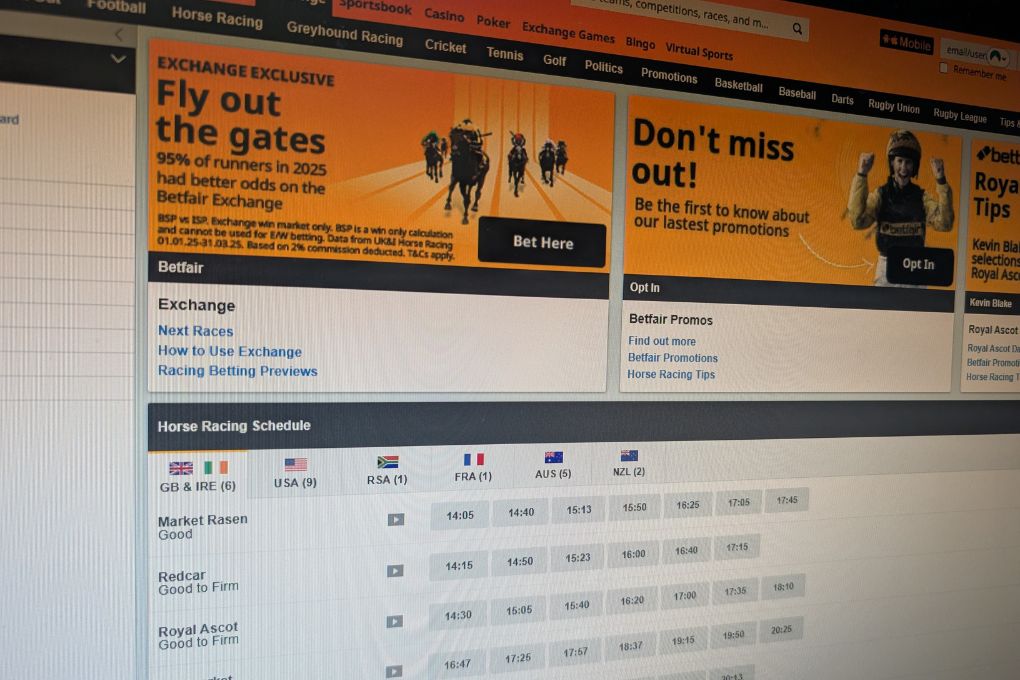
If you’ve ever dipped into a Betfair market right before the off, you know it can feel like a pressure cooker. Odds bounce, money rushes in, and if you’re sharp, patterns start to form.
But here’s the upside: those price shifts? They’re not just noise. They’re shaped by real market dynamics. Liquidity, sentiment, data, and sometimes a few well-placed whispers from behind the scenes have great influence. Whether scalping for a couple of ticks, holding a longer swing or capitalising on offers from new sports betting sites, knowing why prices move — and when — gives you an edge.
Let’s dig into what really drives those movements and how to stay one step ahead.
What Moves Prices Before the Off?
At its core, Betfair is a marketplace. Odds change because supply and demand shift. But there’s more going on under the hood.
1. Weight of Money (WOM)
WOM reflects the balance of unmatched bets in the market.
- A pile of unmatched back bets? The price is likely to shorten.
- More lay money stacked up? Expect the odds to drift.
It’s not always predictive, but when big orders suddenly hit one side, it usually signals growing market sentiment — or a bot getting involved.
2. Market Volume & Liquidity
As the race draws near (especially in the final ten minutes), money pours in. Big races with strong liquidity tend to move more predictably. Smaller markets, however, can be twitchy. In those, even small trades can trigger sharp reactions. I’ve seen this happen many times, first-hand. At their core; all Betfair markets are driven by the forces of supply and demand. You’ll see this at money comes into the market.
3. Bookmakers & Public Sentiment
Bookies often set the tone early. If a horse gets backed heavily at the books, especially after a public tip or a Racing Post nod, Betfair tends to follow.
Likewise, if bookies ease a horse, that drift usually mirrors on the Exchange not long after.
4. Insider Info, Jockey Changes & Non-Runners
Late market moves often come from subtle shifts:
- A respected jockey jumps aboard last-minute
- A non-runner reshuffles the market
- Quiet money from a confident, stable starts flowing in
Smart traders — and bots — are wired in and ready to pounce when these patterns emerge.
5. Automated Bots
Bots dominate much of the pre-race landscape. Bots monitor WOM, scan for arbitrage opportunities, and trigger trades at specific time windows. Like clockwork they’re ticking away in the background, be it 5 or 10 minutes before the off. Learning how they behave (and how to spot spoof orders) is a key skill if you want to trade profitably.
Learning how bots behave (and how to avoid getting duped by spoof orders) is key to staying competitive.
How to Anticipate Price Moves
You won’t nail it every time, but these techniques give you a fighting chance at reading — and riding — the move.
1. Track Prices Early in the Day
Use tools like Oddschecker, Betfair graphs, or software like Geeks Toy to monitor trends.
Ask:
- Has the horse been steaming since the morning?
- Are prices stable or bouncing around?
- Is it building toward a breakout, or has it run out of momentum?
A strong morning move might continue… or stall out if the value’s already been squeezed dry.
2. Watch the Ladder Live
The ladder is where the real story plays out.
- Are big back bets getting snapped up instantly? Momentum’s building.
- Are there gaps on the lay side? Odds might tumble fast.
- Is the price hitting a wall around 2.00 or 3.00? That’s resistance — or a breakout waiting to happen.
It’s not just numbers — it’s the market showing its hand.
3. Time Your Entry
Timing your entry is just as important because most of the real action kicks in during the last three to five minutes before the off. Enter too early, and you risk getting shaken out by noise. Wait too long and you could be chasing a move that’s already run its course. You need to adapt your style of trading to the situation. I’ve spoken about this many times in past blogs.
4. Use Support & Resistance
Just like in financial trading, odds often bounce off familiar levels.
- If a horse keeps hitting 2.80 and pulling back, it might drift.
- If it smashes through with volume behind it, it could steam further.
These levels are psychological markers — use them to guide your trades.
5. Watch for the Tip Money
When a horse gets tipped on TV or in the press, a wave of public money can hit fast.
You’ve got two options:
- Scalp the tip: Ride the early steam, then get out before it reverses.
- Hold the swing: If you believe in the tip’s strength, stay in — but manage your risk.
Pitfalls to Dodge
Plenty of traders come unstuck because they’re reacting too late or misreading the action. Chasing after a move that’s already happened usually means you’re entering at someone else’s exit. Spoofing is another common trap. Some bots flash large fake orders to draw in traders, only to pull the money seconds later. And if you’re operating in a weak market with thin liquidity, even well-read signals can break down fast. Sometimes the smartest play is to sit it out.
Final Thoughts: Learn to Read the Market
Pre-race moves aren’t guesswork; they’re key signals. They come from data, sentiment, and behaviour. With time, you’ll learn to spot them early and act with confidence.
Your advantage isn’t just in predicting what’s next, it’s in understanding why it’s happening and positioning yourself before the herd.
Track your trades. Review your calls. Sharpen your instincts.
Because the market does speak, and the best traders are just the ones who know how to listen.