Learning how to predict the first goal scorer in football matches can feel like guesswork, but it doesn’t have to be.
With the right stats, tactics, and player trends, you can turn a high-odds punt into a calculated strategy. This guide shows you exactly how to analyse line-ups, form, and playing styles so you can spot value beyond simply backing the star striker.
So in this article, we’ll look at the layers of information that can give you a genuine edge. From the manager’s team sheet to the specific minute a certain player tends to strike.
Why Predicting the First Goal Scorer Matters:
The first goal is a noteworthy event in a football match. After all, as a study in the Chinese Football League found, teams win 66.31% of the time after scoring the first goal. It shatters game plans, emboldens one side, and forces the other into a state of frantic urgency.
For the bettor, this initial breakthrough offers a market with attractive odds, far superior to simply backing a player to score at any time. Furthermore, it demands a deeper look and a more forensic examination of the variables at play. Getting it right is a testament to your understanding of the beautiful game.
Pre-Match Checklist for First Goalscorer Predictions…
Before you even glance at the odds, there are three fundamental boxes you must tick. Ignoring these is like building a house on sand, and the entire bet is vulnerable to collapsing.
- Confirm the starting XI: Never place this bet until the official team news is released, typically one hour before kick-off. You’ll find that a last-minute check for any unexpected changes is always wise.
- Understand the tactical system: Is the team a possession-based juggernaut or a counter-attacking unit? A player like Erling Haaland thrives in a dominant Manchester City side that creates a high volume of chances. In contrast, a pacy forward like Mohamed Salah can be lethal on the break for Liverpool. The style of play directly influences which players get the best opportunities early on.
- Analyse recent form and momentum: Football is a game of confidence. A striker who has scored in his last three outings is living in a state of heightened anticipation. They expect to score every time he crosses the white line. Conversely, a team on a poor run might start nervously, increasing the likelihood of conceding first. Also, it’s worth noting that the home team scores first 57.8% of the time in the Premier League, according to the data for the 2014/15–2016/17 seasons.
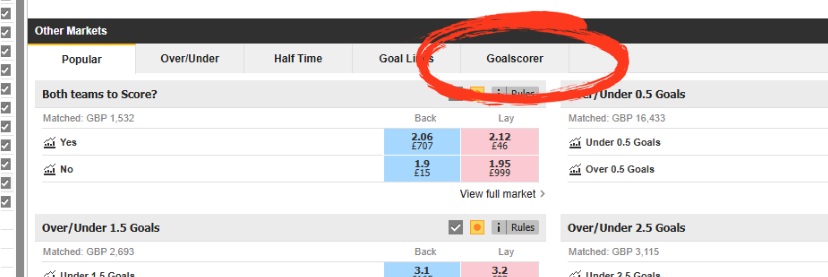
Key Factors in Predicting the First Goal Scorer:
With the basics covered, it’s time to interrogate the specific details that can point you toward the right player.
Team Tactics and Attacking Patterns
Where do a team’s chances come from? If a side is heavily reliant on crosses, your focus should shift to the aerial presence of their centre-forward. A team that wins a lot of early corners or free-kicks in dangerous areas immediately brings set-piece specialists into the frame. That’s both the takers of indirect free-kicks and the players attacking the ball.
Additionally, look at the average touch maps and shot locations from a team’s previous games. They often reveal a clear pattern of where the danger originates. This can particularly useful when it comes to predicting a draw in football.
The Penalty Box Poacher
Some players have a sixth sense for being in the right place at the right time. They are the tap-in merchants, the predators who come alive when the ball is in the penalty area. These players are prime candidates for a first goal.
That’s because they often benefit from early defensive errors or scrambled clearances. Jamie Vardy, in his prime, was the quintessential example. He was a hunter whose entire game was based on capitalising on uncertainty. It made him one of the top goal scorers for a significant period of time.
The Set-Piece Specialist
This is arguably one of the most valuable angles for a first goalscorer bet. If a team has a designated penalty taker who is also on the pitch, their odds instantly become more appealing. The probability of a penalty being awarded in any given match, while low, is a constant. Beyond penalties, consider players who are primary threats from corners and free-kicks.
A dominant centre-back like Virgil van Dijk or a powerful midfielder like James Ward-Prowse can often be found at excellent odds to score first. That’s precisely because of their aerial threat from dead-ball situations.
The “Early Doors” Specialists
Dig into the timing of goals. Some players and teams have a habit of starting fast. A team like Liverpool under Jurgen Klopp was famed for their high-intensity starts. They often overwhelm opponents in the first twenty minutes.
Furthermore, researching which players have a history of scoring early goals can uncover tremendous value. That’s especially true if the odds haven’t yet adjusted for this specific trend. Note that the first goal occurs in the first 15 minutes in around 30.67% of games. That’s according to data in the Premier League between 2014/15 and 2016/17.
How to Find Value in First Goalscorer Betting
Anyone can back the favourite. The art is in spotting the value bet, the player whose odds are longer than they should be. This is where you can truly profit.
- The midfield runner: A box-to-box midfielder making late & unchecked runs into the box can often arrive at the perfect moment to slot home a cut-back. These players are rarely the shortest odds but can be goldmines.
- The opposing defender: This might seem counterintuitive, but an own goal is always a possibility. While you can’t bet on a specific player to score an own goal, a defensive error often leads to a tap-in for an opposing attacker who might be lurking. Assessing a defence’s propensity for early mistakes can guide you towards the opposing striker most likely to capitalise.
- The winger on the counter: In a match where an underdog is set up to defend deeply and break quickly, their rapid winger becomes a prime candidate. The odds on this player scoring first will be higher than if his team were the favourites.
Your Turn to Predict the First Goal Scorer
Predicting the first goalscorer is a combination of diligent research, tactical understanding, and that tiny spark of intuition. It’s about seeing the game within the game. By moving beyond the obvious and delving into the details. That means the set-pieces, the early patterns, the specific player roles.
Get it right and you’ll transform your approach from a hopeful punt into an informed strategy. So, study the teamsheets, analyse the stats, and place your bet. That moment when your pick runs away in celebration, it just feels different.