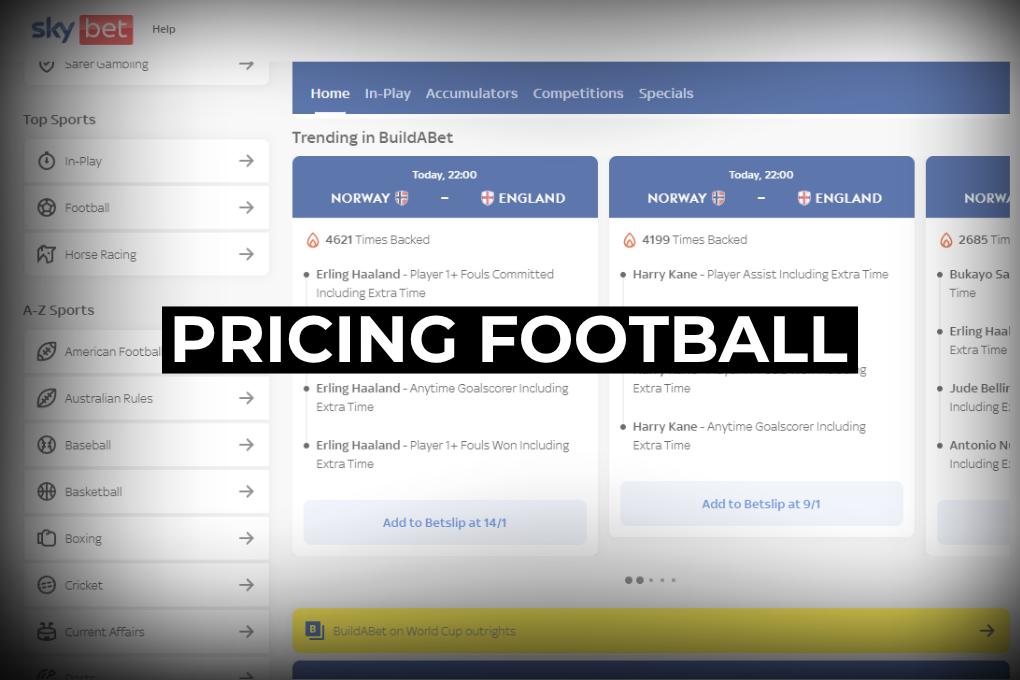
Ever wondered how bookmakers decide whether a team should be 1.80 or 2.20 to win?
It isn’t guesswork.
Footie odds are formed with huge amounts of data and mathematical modelling…
So in this guide, I’ll explain how football betting markets are priced, what the overround actually is, and why odds sometimes move before any obvious news breaks.
Quick Answers
- How do bookmakers set football match odds? They use statistical models, then add a profit margin called overround.
- What is the overround in football betting? It is the bookmaker’s hidden fee built into every market.
- Why do odds change before kick-off? Team news, injuries, and betting money trigger real-time price moves.
- Which football market has the lowest margin? Premier League match odds, due to high competition and liquidity.
- Do longshot bets offer worse value? Yes, bookmakers bake a much larger margin into high odds.
What Are Football Markets?
Football markets are the specific betting options offered by bookmakers on a match or competition. Instead of simply picking a winner, you can bet on countless outcomes that unfold across 90 minutes.
Examples of popular football markets:
- Over 2.5 Goals: A bet on three or more total goals being scored.
- Top Scorer: Predicting which player will net the most goals in a tournament or season.
- Both Teams to Score: A simple yes/no bets on if each side will find the net.
These markets give punters more control and variety than a standard win-draw-loss bet. Bookmakers price each one using statistical models and real-time data, adjusting odds as the game evolves.
In my experience, understanding the range of markets available helps you spot value and avoid the most heavily taxed bets, especially on longshots.
The Algorithm Behind the Odds
Gone are the days of a solitary trader with a pencil and a gut feeling. Modern bookmaking is a high-tech industry that relies on three distinct pillars to build the market.
- Data models: In major leagues like the Premier League, odds start with Expected Goals, player tracking data, and historical head-to-head records.
- The margin: A coin flip has a 50% true probability (2.00 in decimal odds). A bookmaker rarely offers this fairness. Instead, they might offer 1.91, building a 4-5% margin directly into the price to guarantee their edge.
- Real-time adjustments: If a star striker is ruled out in the warm-up, algorithms instantly re-calculate the prices, often before the human traders have even spotted the substitution.
Decoding the Overround
To understand the price, you must see the hidden tax within it. The Overround is the total implied probability of a market.
In a perfect world, the chances of a Home Win, Draw, and Away Win would add up to 100%. In a bookmaker’s world, they hit 105% or higher.
|
Market Type |
Typical Margin (Overround) |
Why The Difference? |
|
Premier League |
4% – 6% |
High liquidity & competition keeps prices tight. |
|
Championship |
6% – 8% |
Lower trading volume allows for a wider spread. |
|
Lower Leagues / Cups |
8% – 12% |
Higher uncertainty requires a larger safety net. |
|
Betting Exchanges |
1% – 3% |
Peer-to-peer models remove the traditional bookmaker risk. |
Note: This table reveals an immediate edge for the savvy punter. If you are betting on a League Two fixture, you are paying a much higher entry fee than you would for a Manchester Derby. Understanding this margin is step one to finding value in football betting.
How Live Money Moves the Line
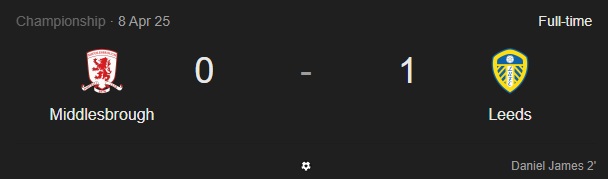
Picture this on a Saturday 3pm kick-off for Leeds vs. Middlesbrough. Leeds open at 2.10 to win. Suddenly, a known professional syndicate places £50,000 on Leeds across several bookmakers.
The market reacts within two minutes, so Leeds drop to 1.85. Also, the Draw drifts to 3.60, and Middlesbrough stretches to 4.50.
Thirty minutes later, team sheets confirm Middlesbrough’s best defender is missing. Overall, the bookmaker moved the line not because they changed their opinion, but to protect against informed money.
The takeaway: If you see odds crash without any obvious public news, it’s often a sign that respected or well-informed money has entered the market. The value disappeared the moment the syndicate bet. By the time you notice the move, you are too late.
What Punters Get Wrong
The most common mistake British punters make is believing the margin is spread evenly across all selections. This is known as the favourite-longshot bias.
Bookmakers know that a punter sticking a fiver on a 50/1 shot isn’t pricing the chance of winning; they are pricing the dream of a massive payout.
Because bookmakers face higher variance on longshots, they bake a significantly larger profit margin into those long odds than they do on the short-priced favourite.
|
Bet Type |
Estimated True Margin |
Why The Difference? |
|
Heavy Favourite (1/5) |
2% – 4% |
Low risk, high liquidity. Kept tight to attract action |
|
Mid-Range (2/1) |
5% – 7% |
Balanced market with moderate liability. |
|
Longshot (20/1+) |
10% – 20%+ |
High volatility. The bookmaker insures against unlikely payouts. |
If you want to bleed less value over a season, you will consistently lose less money backing shorter-priced favourites than you will chasing 100/1 miracles. For instance, correct score probabilities can have longer odds than other markets.
Why Understanding Football Markets Gives You an Edge
The next time you see odds tumble, do not feel you missed the boat. Instead, recognise the pattern, so you just spotted a clue for next weekend. Every line shift tells a story, whether it’s the top scorer market or a two-way bet.
By learning to read those movements, you shift to being an observer of the game within the game. Knowing why a price changed before the news broke is the real edge.
Related: Which Football Betting Markets Are Most Profitable?