
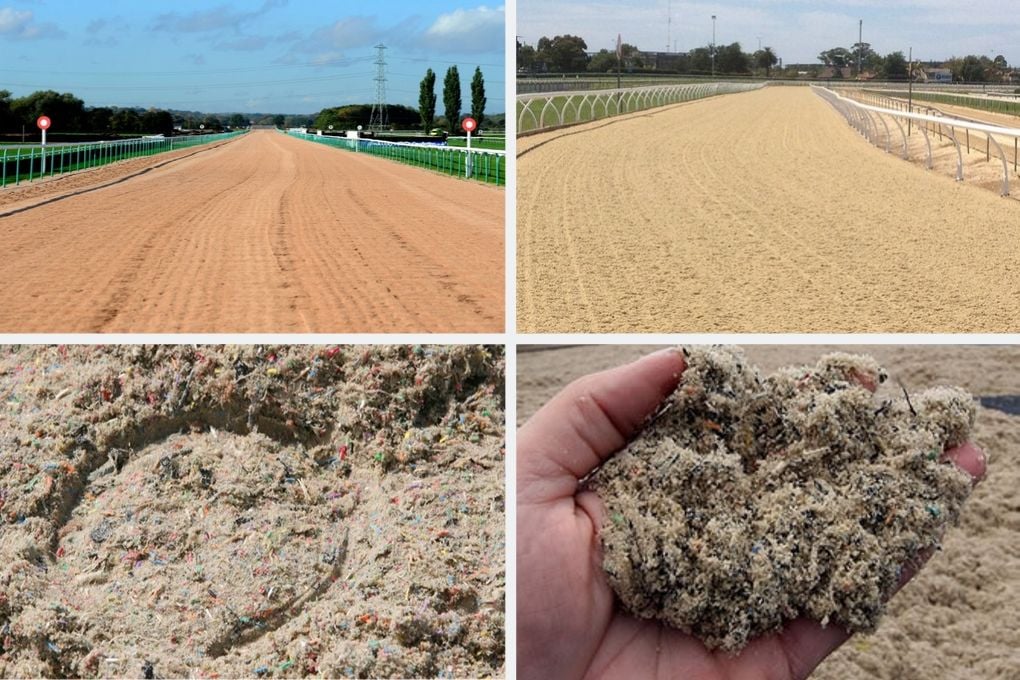
All Weather Racing is a massive part of the UK Fixture List. Six tracks use all-weather surfaces, offering year-round racing opportunities.
However, there’s a massive difference between the various racecourse surfaces…
In this article, we’re going to explain the differences between the three primary surfaces used in all-weather racing:
- Polytrack
- Fibresand
- Tapeta
All Weather Racing History…
Did you know that all-weather racing was originally meant for jump racing?
Back in the 1980s, the idea was to use all-weather surfaces to improve winter jump racing conditions. However, the experiment failed as horses frequently finished lame, leading to the cancellation of jump racing on these surfaces and the transition to flat racing.
All-weather racing initially had a poor reputation, with many owners and trainers considering it suitable only for lower-quality horses. It took more than a decade to change that perception.
Today, all-weather racing has come a long way, with high-quality races featuring top-class horses across the six UK tracks. However, some punters remain skeptical despite the success of the All-Weather Championships.
What is a Polytrack surface?
Polytrack is the most widely used surface for all-weather tracks in the UK. Trainers prefer it due to its consistency, speed, and minimal kickback. It is designed to offer a fair racing experience with little variation in conditions.
Key Features of a Polytrack Surface:
- Consistency – Polytrack provides a stable and consistent racing surface, reducing the variability that can affect race outcomes.
- Drainage – The surface has excellent drainage properties, ensuring that races can proceed even after heavy rainfall.
- Horse Welfare – Similar to Tapeta, Polytrack is designed to minimize the risk of injuries, providing a softer landing for horses’ hooves.
Polytrack vs. Tapeta: While both surfaces are widely used, Polytrack offers greater heat resistance, making it a preferred choice in warmer climates.
What is a Tapeta Racing Surface?
Tapeta is a type of synthetic racetrack surface made from a mixture of sand, rubber, and fibres coated with wax. Former trainer Michael Dickinson developed the surface, Tapeta aims to provide a safer and more forgiving surface for horses.
Key Features of a Tapeta Surface:
- Safety – Tapeta is designed to reduce the risk of injuries to horses by providing a consistent and cushioned surface.
- Maintenance – This surface requires less water compared to traditional dirt tracks, making it more environmentally friendly.
- Weather Resilience – Tapeta performs well under various weather conditions, maintaining its integrity in both wet and dry climates.
Several racecourses have switched to Tapeta, including Wolverhampton and Newcastle, recognizing its versatility and safety benefits.
What is a Fibresand Racing Surface?
Fibresand was historically used at Southwell but has now been replaced by Tapeta. This surface was made of high-quality silica sand mixed with synthetic fibers, creating a deep and demanding track.
Key Features of a Fibresand Surface:
-
Stability – The mixture of sand and fibers creates a compact, stable surface.
-
Consistency – Reduces uneven footing, which can lead to injuries.
-
Durability – Requires less maintenance than traditional dirt tracks.
Unlike Polytrack and Tapeta, Fibresand had significant kickback, which some horses disliked. It was much slower and closely resembled soft ground conditions on turf.
Polytrack vs Tapeta (Which is Better?)
There is a debate between some about which surface is better?
In honesty, there are a few differences between the two surfaces. Tapeta is perhaps closer to natural turf, whilst Polytrack has the edge when it comes to heat resistance. Overall both types do a good job at allowing horses to race on a suitable surface which is safe to run on.
Now that you better understand all-weather racing and its intricate surfaces, you are probably looking to kick on and start profiting from your horse racing betting. Finding you’re your own edge in the market can take a long time!
That’s where Insider Edge Bets comes into play. This premier betting tipster service offers meticulously researched, value-driven tips, drawing on insider information from industry contacts to give you an edge over the bookmakers. Specialising in horse racing and greyhounds, Insider Edge Bets delivers real-time tips through a private Telegram group, ensuring you never miss an opportunity for profit. With a proven track record of success, this service is the ideal companion for those serious about profiting from the sport of horse racing.
All Weather Racing Guide (Individual Courses)
Lingfield
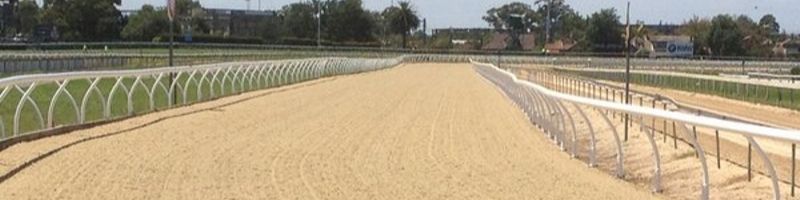
Lingfield is the most prestigious all-weather track in the UK. It hosts the All-Weather Championships each year on Good Friday. The surface at Lingfield is Polytrack and it usually favours speedy horses. You generally get very fast finishes at Lingfield around a tight track.
Generally, we get fast finishes because it is believed that you can’t win from the front at Lingfield; so that leads to them starting slow and finishing fast! The track is slightly downhill too which adds to the speed the horses can generate – it is the fastest all-weather track in the UK.
Southwell
Southwell was the only track that used Fibresand in the UK. Fibresand is the slowest all-weather surface so you tend to get very testing races. You need plenty of stamina to win up the long Southwell straight. The course favours front runners because of the kickback and the slow nature of the surface.
Fibresand is quite deep and from time to time the work on the track can throw up some incredible track bias. It’s generally viewed that the middle of the track is the best place to race, but this can quickly change on a certain day! You need tough horses to win at Southwell, and they need to race towards the front too.
In December 2021, Southwell completed the work on the track to switch from Fibresand to Tapeta, meaning no current course in the UK uses Fibresand anymore. It was a sad day for the horses, trainers, owners and jockeys who enjoyed the surface.
Wolverhampton
Wolverhampton Racecourse started with Firbesand, but then went on to use Polytrack in 2004 after that they changed to Tapeta in 2014. As we explained above, Tapeta is very similar to Polytrack, and with Wolverhampton being such a tight track – it suits speedy horses but because the straight is so short you need to race towards the front to hold a good position.
Wolverhampton was actually the first to stage racing under lights in the UK, and it is generally accepted that they view racing as quantity rather than quality!
Kempton
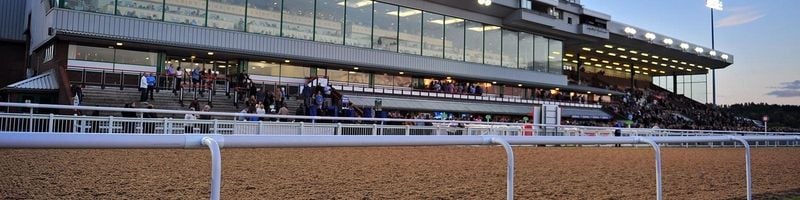
Kempton all weather surface is Polytrack which they implemented in 2006, it has staged all-weather racing year-round since. They managed to keep their high-quality flat races so you see a lot of top quality horses race on the all-weather at Kempton. Aside from the All-Weather Championships at Lingfield, Kempton is the best all-weather track in terms of quality horses racing on it.
It’s a very flat oval track but it has two very different finishes. The inner course really favours speed and being towards the front for a good position, while the outer course has almost three furlong of a finishing straight so horses can really get into a stride and finish strongly.
Chelmsford City
Chelmsford City was originally opened as Great Leighs in 2008, but they closed very soon after opening and after a six-year wait, opened again as Chelmsford City. They use a Polytrack surface on a fairly straightforward oval-shaped course. It’s a very popular course with trainers as they see it as being very fair to their horses, and you could see some very useful horses make their debut here.
The course is a lot more of a galloping track than Lingfield, Kempton and Wolverhampton with big sweeping bends and it’s generally a very fair place where there aren’t many hard luck stories.
Newcastle
Newcastle is the newest all-weather track in the UK. They dug up their turf track and opened their all-weather track in the 2015/2016 winter season. Like Wolverhampton, they use a Tapeta surface and it’s very different from the other all weather tracks because it has a straight mile. They managed to keep their major fixture on the flat, the Northumberland Plate meeting, and with the long finishing straight you generally get the best horse winning. It’s very rare to have the long straight that Newcastle has on all weather racing.
The Future of All-Weather Racing
All-weather racing continues to grow in popularity across the UK. With the success of the All-Weather Championships, we may see more tracks switching to synthetic surfaces in the coming years.
While some purists remain skeptical, all-weather racing provides consistent, year-round opportunities for horses, trainers, and punters alike. The diversity of surfaces also adds an exciting tactical element to betting and trading.
Whether you love it or hate it, all-weather racing is here to stay!
18 thoughts on “All Weather Racing Surfaces: Polytrack, Fibresand & Tapeta Explained”
Very useful information here buddy. Thanks mate.
Cheers, Grizz.
Very useful entry but what about the horse racing surfaces in Ireland? Do they use the same substances? If anybody knows it would be good to find out. Thanks.
Hi Micheal, Ireland is less interest to me due to the reduced liquidity but will look at getting this updated for you inclusive of the Irish all-weather surfaces too. From memory, I believe Dundalk is on Polytrack.
A horse that’s won some races in yarmont for example, will he have trouble on aw track.
That’s really interesting read! The UK it’s good to have all-weather and yes the horse should be comfortable.
Thank you, Emily.
Very informative article, thank you.
More like this Jodeya? Wasn’t sure they are something that all users would want to read about… I tend to go deep on learning the specifics when I look at something although I know it’s not for everyone.
Extremely useful information on track types, especially following racing start up following Covid closure. Many Thanks Bob
Enlightening thanks Caan. Got this bookmarked. I’ve done really well at Newcastle since reading this coincidently. I also enjoy watching the videos on YouTube although I’m not a trader. Keep up the good work !
very usefull info’ thanks Caan, I have often wondered what the differences were with the surfaces. I generally back speedsters and previous coarse winners (horses for courses as they say)
How do these surfaces repel rain and snow in particular?
They don’t repel snow, but being sand based they drain water better than Turf.
thanks learned something new never knew there was a difference
besides all my best horses run on sand….because they,re donkeys
Interesting read, Caan. I knew a bit already about all-weather racing, but your article has filled in a few gaps for me.
Good stuff, thanks.
Tq to read all this ,I m get more knowledge,
I’m not the frog in the well anymore
Is there any difference in standard times for each of the surfaces. I know that conditions vary according to weather etc but it would interesting to compare standard times over say1 1/2 miles at Kemton and Southwell, both level and galloping tracks.