

Blinkers are special headgear that limit a horse’s side vision to improve focus and race performance.
If you’ve seen ‘first-time blinkers’ listed on a racecard, it signals a big change (often used to spark improvement in unfocused or jumpy horses).
In this guide, we explain exactly what they are, why they’re used, and how they affect betting
Let’s get started…
What Are Blinkers in Horse Racing?
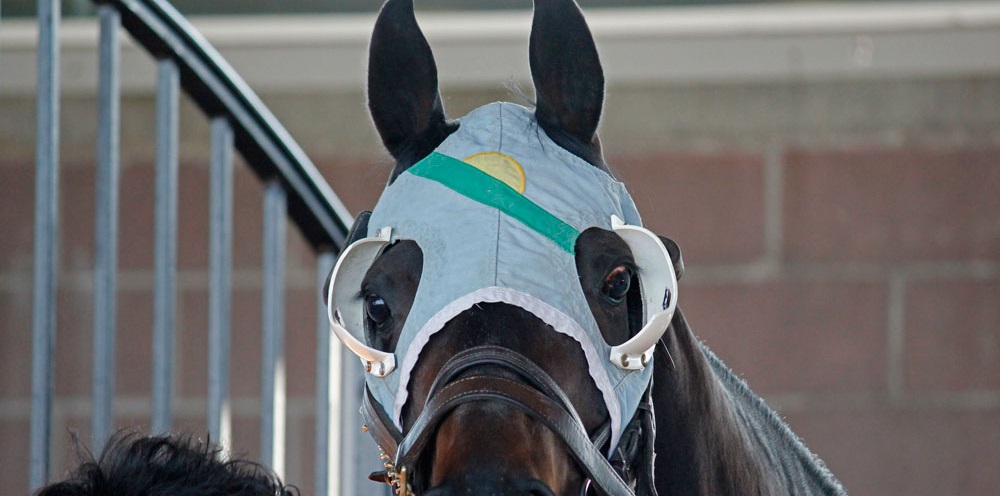
Blinkers are a type of headgear fitted to a horse to limit its vision and help it concentrate. They’re typically made of lightweight fabric or plastic and attach to the bridle, sitting on either side of the horse’s eyes. Most designs feature side cups that block the horse’s peripheral vision, preventing it from seeing what’s going on beside or behind it.
The idea is simple: by cutting out distractions (such as other horses or crowds) a horse is more likely to stay focused on the job.
During intense moments at the Cheltenham Festival and other big racing at big events they can really make a difference for the horses.
You’ll often hear trainers and commentators refer to “first-time blinkers” or “reapplying blinkers”. Both of these are worth paying attention to, especially if the horse has shown signs of greenness or lack of focus in previous runs. On a racecard they are listed as letters like the image below…

In 2026, most digital racecards now highlight first-time headgear automatically, making it easier to spot blinkers, visors or cheekpieces at a glance before the market reacts.
More on that in a moment…
Why Do Horses Wear Blinkers?
In busy race environments, some horses are easily spooked. It’s particularly common in young horses. They lose concentration or drift when pressure comes on – blinkers reduce that risk.
Horses that hang, shy away from other runners or lack early focus should be fitted with headgear like this. For some, blinkers can also encourage a more forward-going, aggressive runs. For trainers who want to influence a horse’s behaviour or official rating, they’re extremely useful.
That said, not every horse improves!
So bear in mind: while blinkers are worth noting on the racecard, they’re no guarantee of better performance.
Quick Tip: First-time blinkers often trigger early market interest. If a trainer has a strong record with headgear changes, watch for price support shortly after declarations which is often where the betting signal appears.
Do Blinkers Improve a Horse’s Performance?
Sometimes, yes — but not always.
For certain horses, blinkers can make a noticeable difference very quickly. If they’re breaking from the stalls it can make a significant difference as they take an early lead. You’ll often hear commentators mention a “marked improvement” in horses wearing them for the first time.
But blinkers not a guaranteed fix…
Trainers often experiment by trying blinkers, removing them, switching to visors or cheekpieces. If a horse’s run history is littered with different letters, beware. That usually signals unpredictability. The trainer is trying different tactics to fix a problem here! Potentially, it could be a decent lay bet.
From a betting point of view, “first-time blinkers” is a flag worth noting though, especially when paired with a trainer who has a good record using them.
However, the key is context. Look at the horse’s previous behaviour. Was it hanging, distracted, or reluctant? If so, blinkers might be the change it needed.
Different Types of Horse Racing Blinkers Explained:
Not all blinkers are the same, and different variations can have slightly different effects.
Here are the main types you’ll come across:
- Full Cup Blinkers: These cover most of the horse’s side vision and are the strictest in terms of visual limitation. They’re used on horses that are easily distracted or known to hang badly.
- Half Cup Blinkers: A milder version. They block less of the peripheral view and are often used when a horse needs focus but not total visual restriction.
- Visors: Like blinkers, but with small holes in the cups. They allow limited side vision and are usually for horses that need to see a bit of what’s around them to stay relaxed, but still benefit from some focus.
- Cheekpieces: Not technically blinkers, but often grouped in the same category. These are strips of fleece attached to the bridle. They offer light visual limitation and can encourage a horse to race more straightforwardly without completely cutting off vision.
Each horse responds differently – so don’t be too observant before placing a bet!
How to Spot When a Horse Is Wearing Blinkers
Blinkers aren’t always obvious unless you know what to look for, but there are a few easy ways to tell. First, check the race card (see image above).
Horses wearing blinkers will be marked with a “b” next to their name. If it’s the first time the horse is wearing them, it will say 1st time blinkers or simply “b1”. You might also see “v” for visors or “p” for cheekpieces.
In televised racing, commentators usually point it out during the prelims or while loading at the start. You’ll also spot the gear visually – blinkers are often black, with rounded eye cups extending slightly from the horse’s head. Occasionally, the hood stabilising them is a bright colour.
If you’re betting, the key is noticing when the headgear is new. First-time blinkers can signal a change in tactics or an attempt to spark improvement and sharp punters often factor that into their thinking.
Do Blinkers Affect Betting Strategy?
They can, yes. When it’s a first-time switch coupled with the horse racing conditions and track, this is especially true!
When a horse is fitted with blinkers for the first time, it often signals intent. Trainers don’t usually make the change unless they’re trying to spark fast improvement. As a result, you’ll sometimes see early market moves when blinkers are declared.
That said, it’s not a reason to back a horse blindly. You want to pair the gear change with other clues; trainer form, course conditions, and whether the horse’s past runs suggest a focus issue.
Used properly, it’s one more edge in your analysis. And when punters ignore it, that’s when you can spot a price that’s just a bit too big.
Summary: When Blinkers Matter Most
- First-time blinkers are the biggest clue with headgear (look for market movers).
- Blinkers suit horses that hang, lose focus, or react to crowds.
- Trainer stats + headgear changes = betting clue from the inside.
- Watch trainer stats with first-time headgear, some trainers consistently improve horses with blinkers.
Verdict on Blinkers in Racing
Blinkers are one of those subtle details that can have a big impact. For some horses, they make all the difference. Many a time a gamble is landed when a horse suddenly wears headgear!
The key is knowing why they’re being used and whether it suits the horse in question. Spotting first-time blinkers, understanding the different types, and reading between the lines on a trainer’s intent can all give you an edge. Trainers like Sir Mark Prescott have been known to use them with great success over the years.
They won’t turn an average horse into a champion. But used in the right way, blinkers can be a small change that leads to a big result.
Related: What is Classified a False Start in Horse Racing? The Rules & Betting Impact