

You’ve probably seen those ads promising tax‑free profits and 24‑hour trading across thousands of markets…
Spread betting can seem like the holy grail to punters who’ve grown tired of bookmaker restrictions. But before you throw your bank into it, let me share a few lessons as a trader.
This isn’t a get‑rich scheme; spread betting can be both lucrative and extremely dangerous.
So in no particular order, let’s get stuck in…
How Spread Betting Works for Beginners:
In simplest terms, spread betting allows you to speculate on whether the price of an asset will rise or fall without owning it. You bet a certain amount per point of movement. These points are commonly referred to as a ‘tick’. If the market moves in your favour, you make money; if it goes against you, you lose.
Check out the image below for an example:
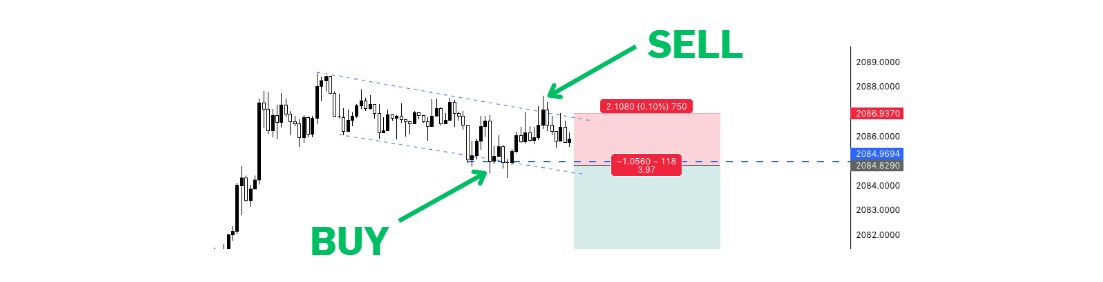
The key attraction in spread betting is leverage: you can put down a small margin to control a much larger position. This leverage is what makes spread betting both appealing and disastrous for new traders. Unlike sports trading, profits and losses are calculated on the full position size, not just the deposit.
With fixed‑odds betting, you can go long or short (betting a price will either rise or fall). This flexibility means you can profit in bull or bear markets.
Another perk, at least for UK residents, is that profits from spread betting are typically free from capital gains tax and stamp duty because HMRC treats it as gambling rather than formal investing. There’s no commission either; the cost is baked into the spread (the difference between the buy and sell prices). On top of that, you can trade most markets around the clock, giving you access when others are asleep.
This all sounds great on paper, but the reality is that spread betting brokers estimate that a majority of their retail clients lose money…
According to the Financial Conduct Authority, approximately 80% of customers lose money when investing in CFDs, a figure that closely mirrors retail outcomes in spread betting.
Why? Because leverage magnifies both sides of the equation. If you open a £10 per point bet on the FTSE and it moves 100 points against you, you’re £1,000 down. The broker will issue a margin call asking you to either top up funds or close out the position if this should happen. It depends on the account type but you need a balance to cover your potential losses.
The Upside of Spread Betting (and the Trap)
The main reward of spread betting is clear: you can enter positions with a small stake, capture moves in any direction and pay no taxes. You can also avoid currency conversion fees when trading international markets because everything is denominated in GBP. This is why so many traders use spread bets to hedge existing stock portfolios or to scalp daily moves on indices and forex pairs.
But these advantages have a darker side…
Leverage is a double-edged sword. It can boost your returns, but it can wipe out your account too. Market volatility, particularly in thinly traded instruments, can lead to slippage. Sudden gaps in prices can cause automated account close‑outs where the broker forcibly shuts your positions to prevent a negative balance. And because markets run 24 hours, it’s easy to overtrade or start chasing losses when you should walk away. Chasing is never the answer!
From experience, the biggest mistake newcomers make is betting too big too soon. They see a market trending and pile into a £50 per point position without appreciating that a 20‑point retracement can cost a grand. I’ve seen accounts blown up by a single unexpected news announcement. The other trap is treating spread betting like a punt. The spread is your cost of doing business; you need the market to move enough in your favour to cover that cost. Small choppy movements often result in small, repeated losses so watch out!
Managing the Risks…
So how do you harness the rewards without falling into the trap? First, respect the margin.
Only risk a small percentage of your bank on any single trade. Remember, spread bets come with a high risk of losing money due to that previously mentioned leverage.
On Betfair, you might risk 2-3% of your bank per race; the same principle applies here. When you’re starting out, drop your bet size to £1 per point and focus on consistency rather than chasing big wins. Remember, with leverage, losing more than your deposit is a real possibility.
Second, use stop‑loss features. Every spread betting platform offers them. A stop loss automatically closes your position at a predetermined price, capping your downside. It doesn’t guarantee you won’t be slipped, but it does prevent a small mistake from becoming a catastrophic loss. Never move your stop further away because you ‘think it will bounce’. That’s the spread betting equivalent of letting a losing trade run on Betfair…

Third, pick your markets wisely. Highly volatile assets like cryptocurrencies or penny stocks may offer big moves, but they also deliver large swings. Beginners should stick to liquid, slower‑moving markets, such as major forex pairs or well‑known indices. Liquidity helps reduce slippage and makes it easier to manage positions. If you’re trading late at night or during a news event, be prepared for gapping. I learned this the hard way during the Brexit referendum; an unexpected result caused the pound to gap 200 points in seconds. Even with a stop in place, the fill was far worse than my planned exit.
Finally, keep your emotions in check. I’ve said this many times before but – discipline is key. Spread betting platforms make it incredibly easy to execute trades with a few clicks. If you’re having a bad day, step away. Overtrading is one of the biggest account killers. Likewise, if you’re on a winning streak, don’t crank up the stake size without a clear plan. You wouldn’t double your stake on Betfair Exchange after a single winning trade, so don’t do it here.
A Trader’s Takeaway:
Spread betting can be a useful tool in your arsenal, whether you’re looking to hedge existing bets. The tax advantages and ability to go long or short are real. However, the leverage that makes it attractive also magnifies mistakes. Successful spread bettors treat it like a business (and you should too). They manage risk, use stops and never stake more than they can afford to lose.
In short, the rewards are there for disciplined traders, but the risks are ever‑present. Make sure you have an edge!!
That’s as true on a spread betting platform as it is on Betfair. So if you decide to give spread betting a go, start small, set clear limits and be prepared to walk away. With the right mindset, it can complement your trading toolkit. Without it, it’s just another way to hand your money to someone else.
Related: Sports Trading – The Comprehensive Guide to What, How, and Why