

Over and over we hear these kinds of comments…
“Slot machines have the highest addiction rate, so they cause gambling addiction”
But it’s simply not true!
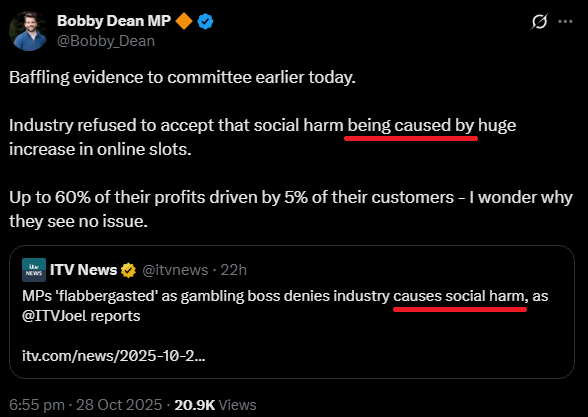
Yet campaigners repeatedly make these claims, and politicians fall for it (particularly when it comes to gambling). It’s like saying hospitals cause death because so many sick people end up there.
Let’s clear this up in simple terms so that all can understand.
Why Correlation Isn’t Causation…
First, a little context on these two terms:
- Correlation means two things happen together, like rain and umbrellas.
- Causation means one thing makes the other happen, like pushing a glass off a table causes it to fall.
Just because umbrellas appear whenever it rains doesn’t mean they make it rain. The same goes for slot machines (or any other product) when it comes to addiction. The Gambling Commission have even written to the government to correct such claims.
Yes, a survey might show that a higher proportion of problem gamblers play slots online, but that doesn’t prove slots are better or worse than sports betting. It simply tells us what’s more popular amongst those with a problem.
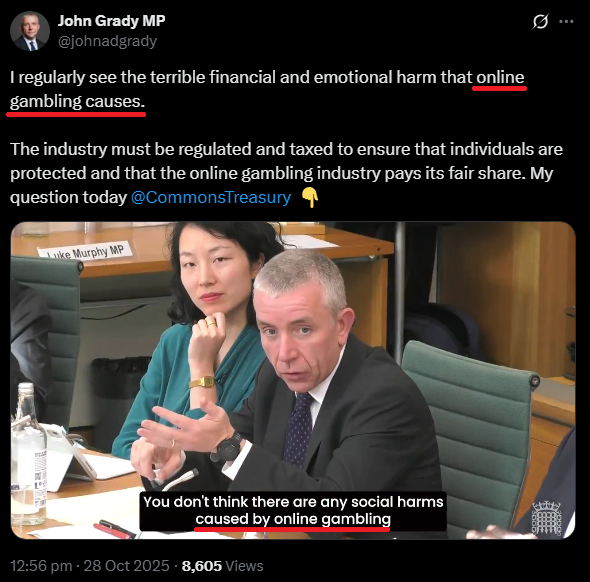
We can find absurd examples everywhere we go if we like…
More people eat ice cream in summer, and more people drown – so does ice cream cause drowning?
Hospitals are full of cancer patients – do hospitals cause cancer?
Worse still, the death toll among cancer patients is far higher than almost every other illness. Does this mean that those treating cancer patients cause more death?
The logic is laughable when you lay it out, yet in gambling debates, it passes for evidence…
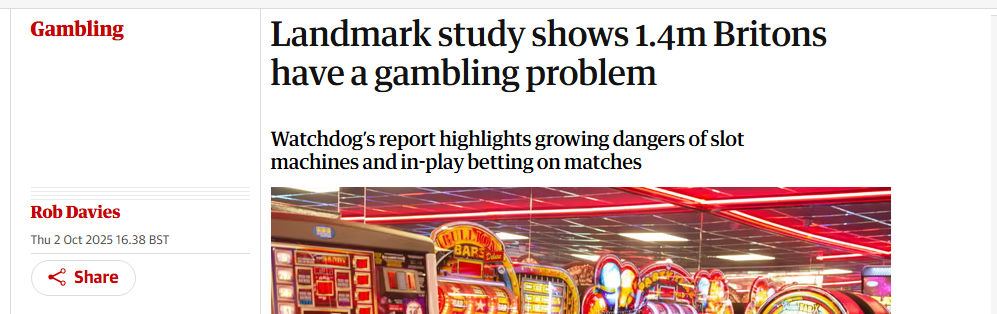
The Gambling Commission’s own guidance warns that its statistics should not be used as a measure of addiction or for direct comparisons with other surveys.
Yet, when the commission changed its surveying methods, the usual newspapers couldn’t wait to label it as ‘growing dangers of slots’. Other activists immediately declared a surge in “addicts”. In reality, nothing had changed at all.
Where Gambling Debates Go Wrong…
So why does this confusion persist? One reason is cherry‑picking statistics. Activists trawl through reports looking for the largest PGSI percentages tied to a product and ignore context.
If 10% of regular slot players have a gambling problem and only 1% of lottery players do, they proclaim “slots are ten times more addictive than the lottery”. They don’t mention that many problem gamblers dabble in multiple activities and have many problems – slots, sports betting, bingo, and even substance abuse.
Furthermore, 63% of gambling addicts are reported to be alcoholics.
If we’re to follow the MP’s logic above, that would mean Carlsberg is responsible for creating gambling addicts too, which is obviously ridiculous.
And then there’s the base rates to consider…
There are millions of lottery players and far fewer slot players, so a small number of problem gamblers skews the percentage.
So why do politicians and the media repeatedly parrot these lines?
It’s probably no real shock to say – politicians will say anything if they think it’s a vote-winner. The media aren’t far different; a little sensationalism is great for advertising, especially if the masses (who don’t gamble) agree. They don’t seem to actually care.
It takes me back to when I warned the Gambling Commission and newspapers that Football Index was operating similar to a Ponzi scheme. They didn’t even respond or follow up beyond an acknowledgement of receipt.
And that’s the real problem with these debates. They’re not driven by facts — they’re driven by emotion, headlines, and a hunt for easy villains.
If someone already has an addictive personality, they’ll usually migrate toward the fastest-paced forms of gambling. That doesn’t mean the product caused the addiction any more than beer causes alcoholism or hospitals cause cancer. The activity becomes the symptom, not the root cause.
When we mix up correlation and causation, we end up with bad policy, bad journalism, and worse outcomes for everyone, including the people who actually need help. Real solutions start with understanding why some people develop addictions, not blaming whatever activity is easiest to point a finger at.
Because umbrellas don’t cause rain, and slots don’t “create” problem gamblers.
Related: Are Regulatory Checks Helping Betting Companies Exploit Consumers?