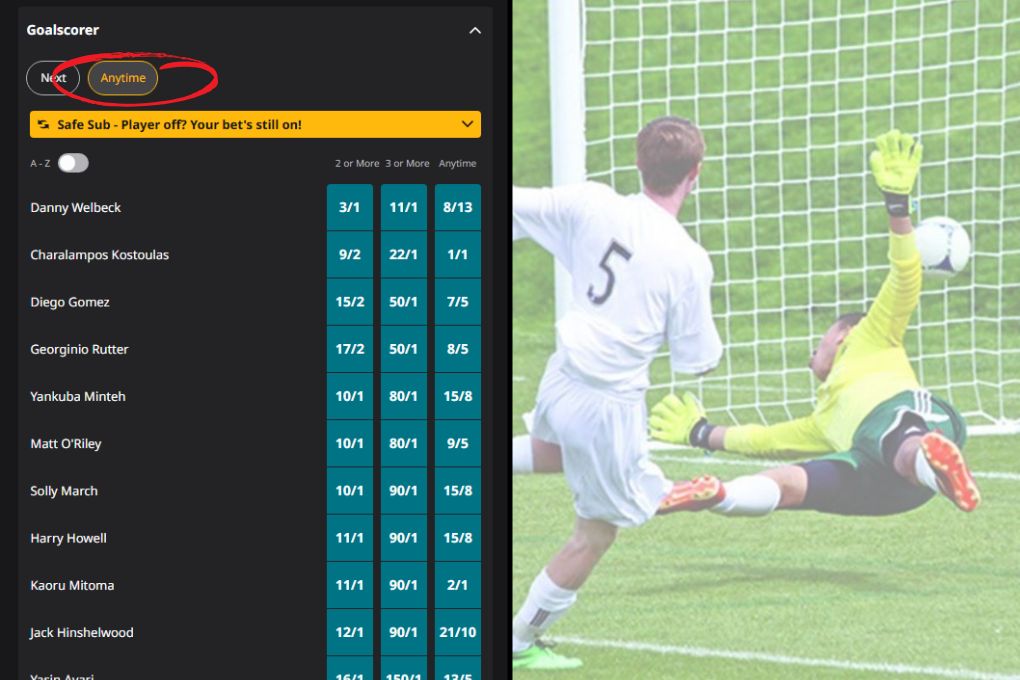
This guide strips away the confusion around anytime goalscorer betting. You will learn how the market actually works, where casual punters lose value, and which stats separate winning bets from hopeful guesses.
Furthermore, I reveal how you can avoid chasing long odds on first goalscorers and build smarter accumulators. You’ll also spot mispriced players before the bookmakers adjust.
Quick Answers:
- Does extra time count for anytime goalscorer bets? No, only 90 minutes plus stoppage time count.
- What happens if my player comes off the bench? The bet still stands if he scores as a substitute.
- Do own goals win my anytime goalscorer bet? No, own goals are void since your player must score.
- Can I combine anytime scorers in an accumulator? Yes, most UK bookmakers allow multiples on this market.
- Why are anytime odds shorter than first goalscorer odds? Higher probability of winning means lower potential returns.
What is Anytime Goalscorer Betting?
An anytime goalscorer bet is when you pick a player to score at any point during a match’s regular 90 minutes plus stoppage time. It means there is no need to predict the first, last, or which minute.
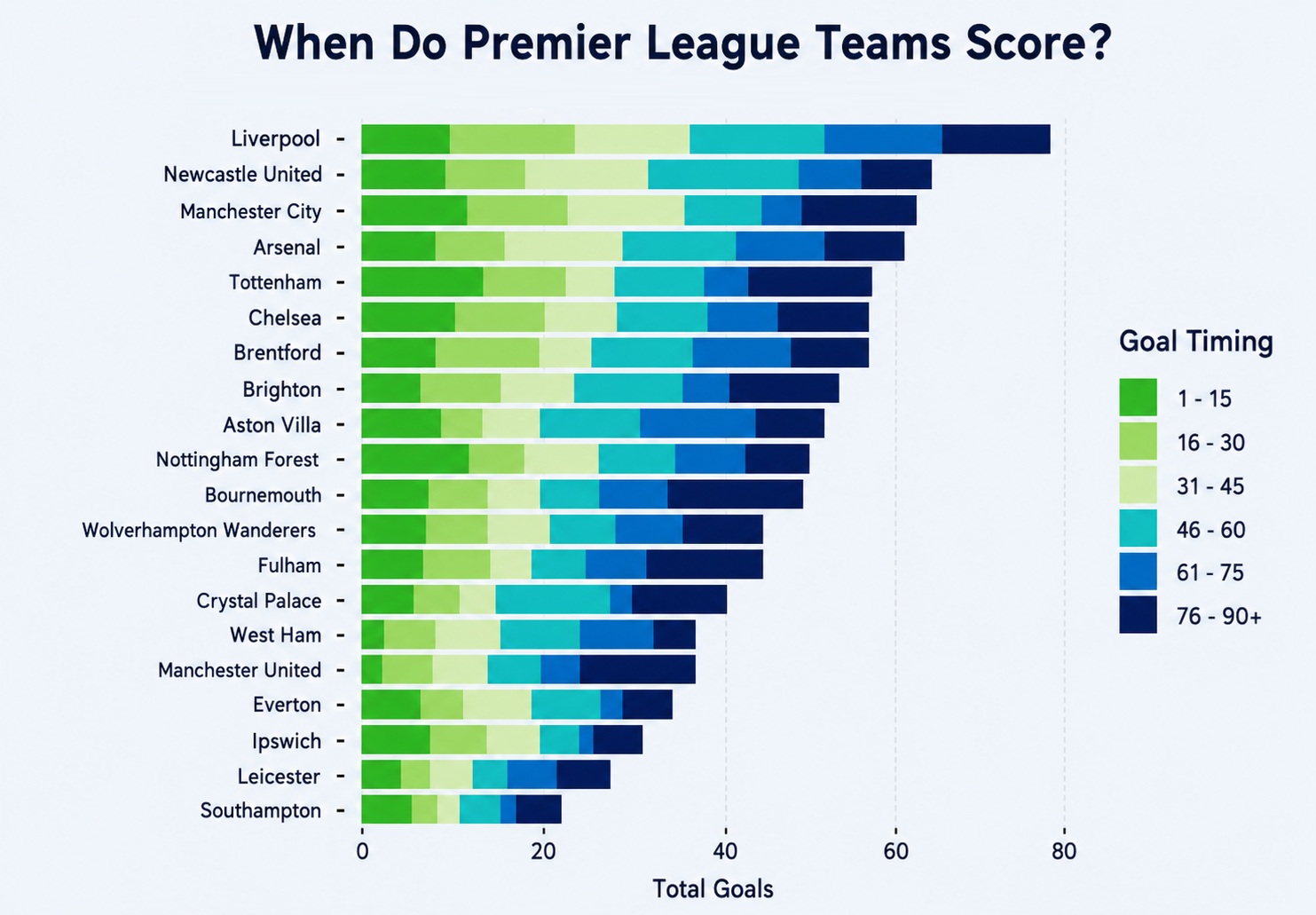
This market strips out the guesswork and focuses on raw finishing ability. Here’s how it breaks down:
- Covers full 90 mins and extra time in cup matches does not count.
- Substitutes count, so if your player comes off the bench and scores, you win.
- Own goals are worthless because the ball must come from your player, not an unlucky deflection.
Backing a forward with high shot volume turns this into a numbers game. Compare that to first goalscorer bets, where the win rate for even elite strikers sits below 12%. Personally, I’ve found it works better with strikers who get 4-5 shots in most games (even if they haven’t scored recently).
Overall, anytime bets offer a lower payout but a far higher probability of a return. That trade-off makes them the backbone of smart accumulators and single bets alike.
How the Odds Stack Up
The odds here are shorter than first goalscorer betting, but the probability of success is higher. Bookmakers price these markets using complex algorithms and Expected Goals (xG) models.
A striker like Erling Haaland might be priced as low as 1.40 because he averages over a goal per game, whereas a centre-back might be priced at 8.00 or higher. This reflects the lower statistical probability of scoring.

A Practical Example of Salah vs. Forest
Imagine it’s a standard Premier League fixture and Liverpool is hosting Nottingham Forest.
You decide to back Mohamed Salah in the anytime goalscorer market. The bookmaker offers odds of 2.20 (which translates to roughly 6/5 in fractional odds).
- Scenario A: Salah scores a brilliant curling effort in the 23rd minute. Your £10 stake returns £22 (£10 stake + £12 profit).
- Scenario B: Salah is subbed off in the 65th minute without scoring, or the match ends 0-0. Your bet loses.
- Scenario C: Salah comes off the bench, scores a hat-trick in stoppage time, and your bet still wins big.
Notice how the final result of the match (win, lose, or draw) is irrelevant here. You are not betting on the team but on the finisher. It’s exactly why I prefer anytime markets to first scorers – there’s nothing worse than backing the right player and then losing because they scored in the 73rd minute.
Anytime vs First Goalscorer Betting Markets
To help you choose the right market for your accumulator or single bet, here is a quick breakdown of how these two giant markets compare:
|
Feature |
Anytime Goalscorer |
First Goalscorer |
|
Win Probability |
High as elite strikers win at around 42% |
Low since even with elite strikers the win are is around 11% |
|
Typical Odds |
Shorter |
Much Longer |
|
Best For |
Builders and accumulators |
High-risk singles and longshot accumulators |
|
Emotional Impact |
Relaxed pressure as you have the whole game |
Intense focus, so you need instant impact |
|
Typical Margin |
Lower house edge |
Higher house edge |
Both types of betting above have in common the quick nature of the outcome, where you either win or lose by the end of a match. In comparison, golden boot betting is a long-term wager that takes place over an entire season.
What Most Punters Get Wrong
The biggest mistake is treating an anytime goalscorer bet like a lottery ticket on a name you recognise. Casual punters chase famous players on bad teams or ignore shot volume entirely.
They also confuse anytime with the first goalscorer, which destroys value over a season.
Here is where the logic fails:
- Overvaluing past goals: A hat-trick last week does not guarantee a tap-in this week.
- Ignoring minutes played: A striker averaging 30 minutes per game cannot sustain returns.
- Forgetting defensive matchups: Elite forwards facing a low-block defence often blank.
I like to hunt for high shot volume, consistent on-target numbers, and players on penalty duty. Also, I found that the market overreacts to recent headlines, not underlying data. That gap between perception and reality is where you find genuine edge.
Place Your Anytime Goalscorer Bet Today
Anytime goalscorer betting rewards patience over panic and data over the top names. You are not gambling on a magical moment, but are investing in repeatable actions.
Pay attention to the patterns, and the market becomes less of a guessing game. Finally, stick to volume, ignore the hype, and let the numbers work for you. The next time you build a bet slip, remember that goals come to those who wait and wager wisely.
Related: Accept All Odds Movement Explained: Should You Turn It On or Off?