

Finding a reliable horse‑racing system can be tricky with so many variables involved…
However, the best horse‑racing systems aren’t about guesswork; it’s a repeatable process built on data and logic.
This step‑by‑step tutorial shows how to build a professional horse‑racing system from scratch, and how you can make the process faster and more profitable along the way.
How Do You Build a Profitable Horse Racing System?
A ‘system’ in horse racing is simply a set of rules designed to find value bets. Instead of relying on traditional horse racing form, you use data such as pace, draw bias or going preferences to find consistent betting opportunities.
For example:
- You might spot that front‑runners at Chester win more often than expected due to its tight turns.
- Or that horses dropping in class after a strong run tend to outperform the market.
These patterns are the foundation of a system. The goal isn’t to find winners – it’s to find betting value.
In short, the true probability of winning must be greater than the market odds. This is why professional bettors talk about ’tissue prices’ or ‘expected value’ and not just who’s likely to win.
Step‑by‑Step: How to Build a Horse Racing System
Here’s how to build your own system manually before you even think about automating it…
1. Define Your Focus
Pick one racing type (flat, jumps, or all‑weather) and start narrow. Specialisation helps you spot consistent trends and filter noise.
2. Collect Data
Download historical results including: track, distance, going, class, draw, pace position, and official ratings. Use at least 12 months of data.

3. Identify Patterns
Look for repeatable situations where certain factors lead to over‑performance.
For example:
- Pace angles: Front‑runners on sharp tracks.
- Form cycles: Horses running within 10 days of a strong finish.
- Draw bias: Low draws perform well on soft ground.
4. Create Simple Rules
Start with no more than three to five filters like…
- 6f-7f handicaps on turf
- Draw 1‑5
- Ran within last 14 days
- SP under 10/1
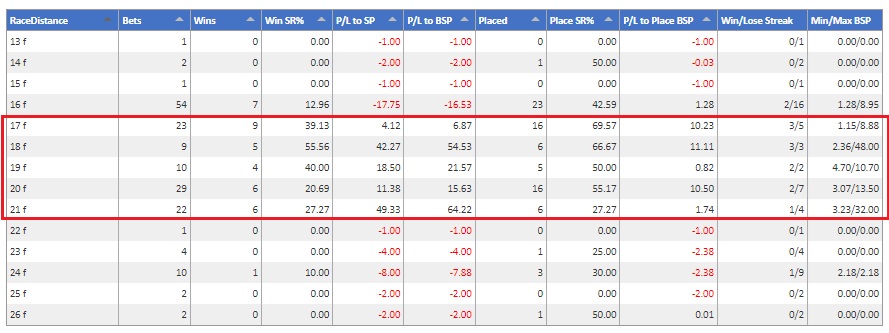
Test the results and record strike rate, ROI, and average odds…
5. Calculate Your Own Tissue Odds
Assign a probability to each horse based on your system’s edge. For instance, if your data suggests a runner wins 25% of the time, your fair price is 3.0 (1 / 0.25). Bet only when the market offers better than your tissue price because that’s genuine value.
6. Record and Review
Keep a spreadsheet of every bet from the Racing Post results. After 100+ bets, you’ll see whether your logic holds up. Adjust one rule at a time and never overfit the system.
A Common Mistake…
A lot of gamblers fail because they skip testing or build systems that are too complex. They use tiny samples, chase patterns that don’t repeat, or ‘curve fit’ past data until it looks perfect. However, in real life, it fails. Others underestimate how much time it takes to track every variable across thousands of races manually.
When you consider all of the data-points involved, including minor things like horse racing blinkers, for example, it becomes complex quite quickly.
Even with spreadsheets, it’s hours of work per week just to keep it running.
A Quicker Solution
If you want to build systems the professional way (but without the grind) some software can do the heavy lifting for you.
I’d recommend checking out our Inform Racing review for this kind of stuff. Their system builder lets you test dozens of rules instantly using decades of historical data. You can filter by pace, distance, class, trainer, jockey, going, or course bias in seconds (and then export real ROI stats to prove what works).
The speed ratings and pace data highlight horses with proven performance advantages, while the betting tissue tool automates fair‑odds calculations so you can instantly see when a horse is overpriced. Instead of spending hours crunching numbers, you get actionable insights in minutes. You can even run automated systems and have alerts emailed daily.
You can try Inform Racing for just £1 here and see exactly how the pros build systems that last.
Conclusion
Building your own horse‑racing system is one of the smartest ways to move from casual betting to professional strategy. By focusing on data, patterns, and value, you’ll understand what really drives profit. And when you combine that approach with the automation and analytics inside large samples, you’re not just guessing, you’re betting with an edge.
Related: How to Make a Betting Tissue (and Find Value Bets Like a Pro)