Sectional times are often mentioned during horse racing TV coverage, but many are unsure what this actually means for their betting…
Put simply, sectional times help explain how a race was run, not just where horses finished. They can highlight hidden effort and add useful context to the form, but only when used properly. Howver, being used alone, they can also be quite misleading – so watch out!
In this article I will explain what sectional times really tell you, when they matter, and how experienced punters use them as part of race analysis rather than as a betting system.
What Are Sectional Times and Why Are They Mentioned So Often?
Sectional times are based on the time it takes a horse to run specific parts of a race. Instead of only looking at the final race time, the race is broken down into sections, often furlongs, to show how fast the race was run at different stages.
They’re mentioned so often because they add colour to what we’ve just watched. Two horses can finish in the same position, but get there in very different ways. One might have raced keenly early and faded late, while another was held up, met trouble, and finished much faster than anything else in the race. Sectional times help explain those differences.
On TV, sectionals are usually used to support a narrative. A fast early pace, a strong finish, or a race that turned into a sprint from the home turn. They help commentators explain why a result happened, not necessarily what will happen next time. Sometimes, it’s worth remembering – they just give the pundit something to talk about.
That distinction matters for bettors a lot…
Sectional times describe the shape of a race, not the ability of the horse in isolation, like their overall speed ratings would. Used properly, they add context to form. Used blindly, they can lead you to the wrong conclusions very quickly. It’s extremely important in an environment where correlation is often conflated with cause.
What Sectional Times Can Reveal (Usually Hidden)
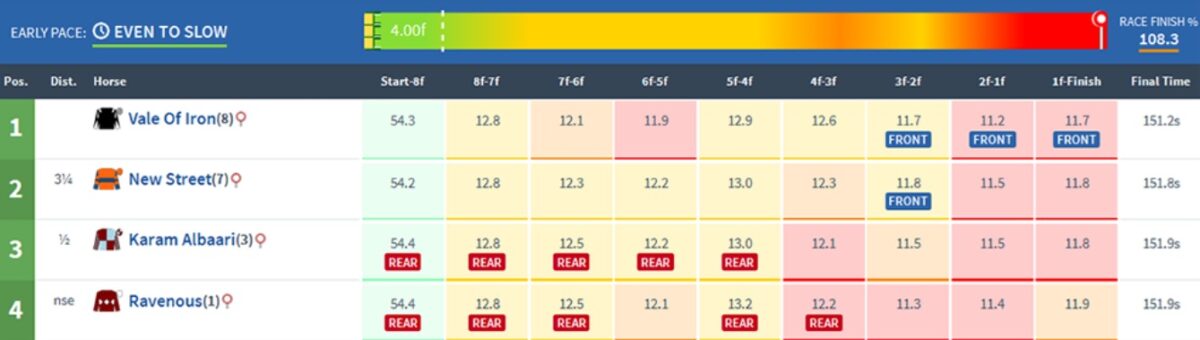
Finishing position shows where a horse ended up, but not how hard it worked during the race. Sectional times help fill in that gap by showing the effort behind the result.
For example, a horse that finishes midfield but records a fast closing sectional may have been held up early and only asked to run on late, when the race was already decided. That can be a much better run than it looks on paper. Without sectionals, those efforts are easily overlooked. I’ve done it myself so keep that in mind…
Sectionals can also expose races run at an extreme pace. Strong early fractions often cause front-runners to fade, making closers look better than they really are. In both cases, sectional times help explain the race shape and why the result looks the way it does, especially when combined with pace analysis.
When Sectional Times Can Be Misleading…
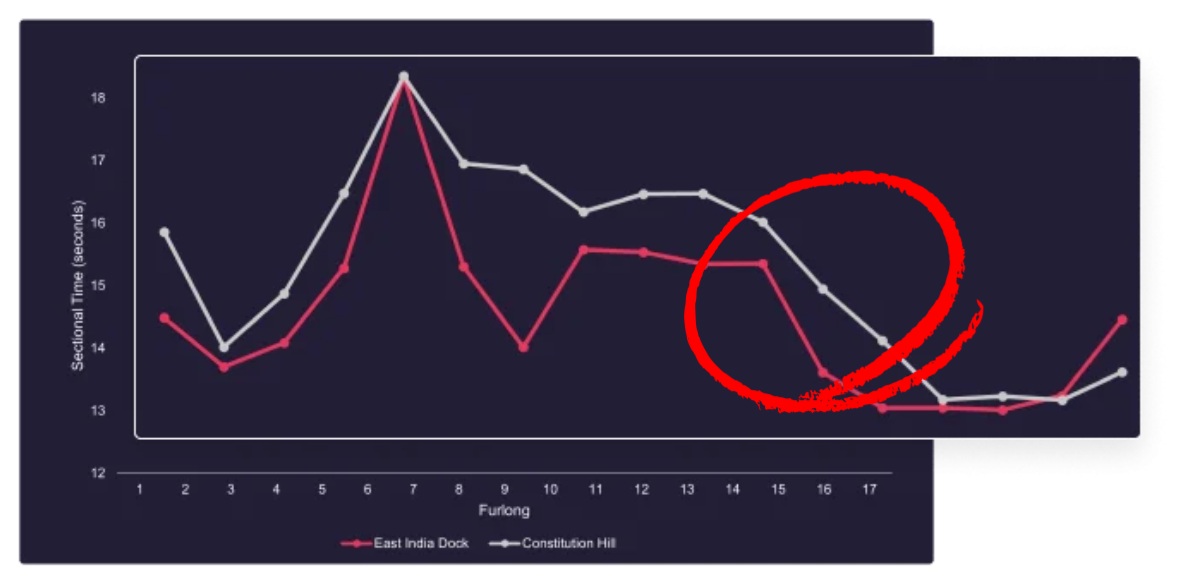
One of the biggest mistakes bettors make with sectional times is taking them at face value. A fast final furlong looks impressive, but it does not always mean a horse has produced a strong performance or is one to follow next time.
A common trap is the slow early pace. In races where the field crawls for the first half, the final sectionals can look very quick simply because the horses have saved energy. These races often turn into short sprints from the home turn, and the finishing times flatter almost everything involved. Horses coming from the back in these scenarios are often overbet next time, despite not facing a truly run race.
Track bias can also distort sectional data. Some tracks favour horses racing prominently, others suit hold-up runners, and this can exaggerate how sectionals appear on paper. A strong finish might be helped by track position rather than ability.
Small-field races are another issue. With fewer runners, there is less pressure on pace and position, which again leads to misleading sectionals. This is why sectional times should always be read in context, alongside race conditions, official ratings, pace and classifications, as per the BHA, rather than treated as a standalone angle.
How Bettors Actually Use Sectional Times in Practice
Most experienced bettors do not use sectional times as a betting system. Instead, they use them as a way of adding context to what they are already seeing in the form and the market.
In practice, sectionals are often used to flag runs worth a second look. A horse that faded late after setting strong early fractions, or one that finished well despite being poorly positioned, might be noted for future races where conditions look more suitable. Sectionals help explain why a performance happened, not whether it was “good” or “bad” on its own.
They are also useful when building a betting tissue. If the market has focused too heavily on finishing position, sectional data can help you adjust your view of a horse’s true chance. Equally, if a horse is short in the market purely because of an eye-catching fast finish, sectionals can help you decide whether that move was genuinely impressive or pace-driven.
Used this way, sectional times become a supporting tool rather than a shortcut. They work best when combined with pace analysis, ratings, and your own judgement, which is where real value is usually found.
Insight, Not a Shortcut
Sectional times can be a useful part of race analysis, but they are often misunderstood. They do not tell you which horse to back, and they are not a replacement for form, class, or market awareness. What they do well is explain how a race was run and why a result may not be as straightforward as it first appears.
Used properly, sectionals help you ask better questions. Was the pace fair? Did a horse do too much too soon? Did a strong finish come from ability or race shape? Those answers matter far more than the raw numbers themselves.
If you want to take this a step further, the natural next layer is understanding pace in more detail. That’s where sectional times really start to make sense.
Related: Horse Racing Pace Analysis – How to Use Pace Angles