
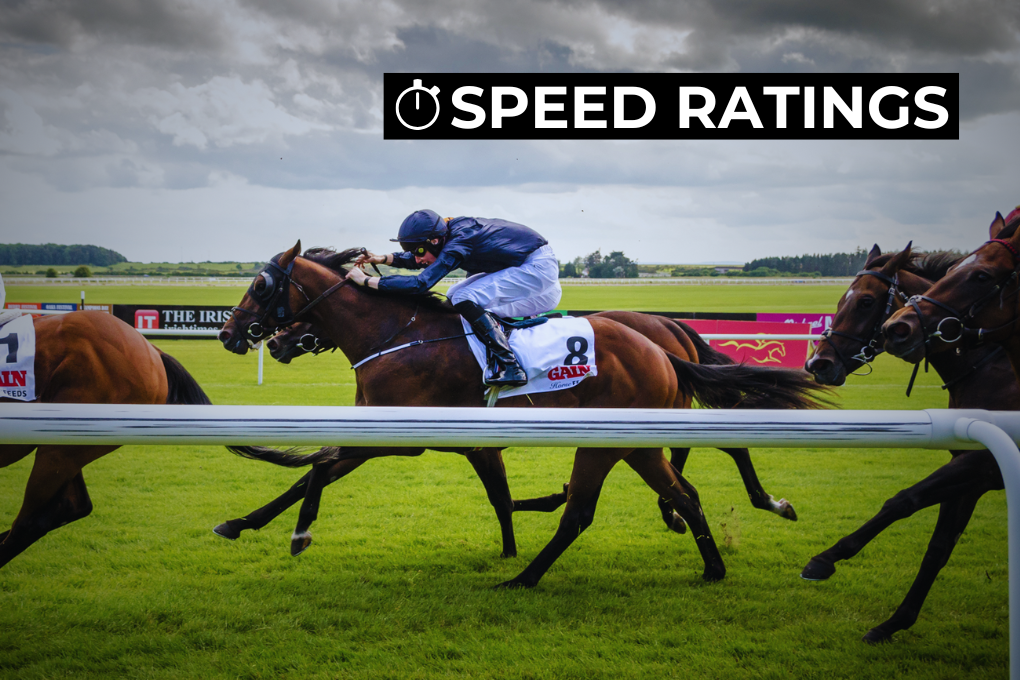
Two horses thunder down the Ascot straight, neck and neck. In-running, the betting looks like absolute chaos…
But it isn’t.
Beneath the noise, horse racing speed ratings reveal what the casual eye can’t see.
Forget the silks, the jockey colours, or what the so-called good judges say. Numbers behind speed figures are what separate the shrewd punters from the casual.
Coming into 2026 speed ratings are now more widely available than ever, but that hasn’t reduced their usefulness. If anything, they’ve become more important as markets tighten, margins shrink, and casual money reacts emotionally to surface-level form.
In this article, I’ll show you exactly why horse racing speed ratings are such a powerful tool for punters who want to gain a real edge.
Update: this ratings tool comes recommended (it’ll save you a heap of time).
Speed Rating Methodology
At their core, speed ratings convert a horse’s raw race time into a standardised figure. Now this might sound a bit crazy at first, but it’s not when you understand how it’s done…
To start, they’re adjusted for key factors like:
- Track dynamics (surface, running rails, draw bias)
- Environmental factors (weather, track moisture)
- Race conditions (weight carried, blinkers fitted, race distance)
However, calculating a true speed rating isn’t simple. As you can imagine, its extremely complicated. On a top level, the process involves 3 stages.
- Raw Speed Calculation: Start by converting the horse’s finishing time into a base figure.
- Track Adjustment: Account for natural speed differences between UK racecourses.
- Daily Conditions Adjustment: Factor in race-day variables like rain, wind, or unusually fast or slow ground.
For example, a horse might run 1:12 over six furlongs. After adjusting for track and ground conditions, this could translate to a Racing Post Rating (RPR) of 94. This may compare to a 1:38 mile on a different day or course. Which makes sense, right?
Hopefully you get the just. It’s complex (but useful) stuff. Attempting to calculate your own speed ratings is difficult. Thankfully, this is why it’s now the industry standard.
Speed Ratings: The Industry Benchmark
Speed ratings have been around for decades, but they weren’t always available to the average punter. Andrew Beyer’s book, Picking Winners, helped open the door by showing how race times could be turned into reliable betting tools.
While Beyer made speed ratings famous in the US, here in the UK, we typically rely on Racing Post Ratings (RPR) and Topspeed figures to do the job. These ratings let punters compare performances across different courses and race types.
Here’s why UK speed ratings are so useful:
- Universality: A 100 RPR at Epsom holds the same weight as a 100 RPR at York.
- Predictive Class Standards: Each race class has a typical ‘winning standard’ or par rating.
- Length Adjustments: In general, you deduct about one point per length lost over sprint distances and slightly less over longer trips.
Class Pars: The Winning Threshold
To explain a bit more, the class par is the minimum speed rating usually required to win a race of that type and grade. Horses regularly running below this figure win just around 4% of handicaps.
When a horse consistently meets or exceeds the class par, it’s a strong sign they’re competitively ready to win today. In short, it’s the tipping point where that four percent jumps massively.
How to Use Horse Racing Speed Ratings
Horse racing speed ratings help punters cut through the noise and focus on what really matters (raw performance).
Start by finding the class par. The minimum speed rating is usually needed to win today’s race. This is a quick way to eliminate horses that consistently run below the required standard.
Next, look for a hidden form. These are horses that ran at or above the class par last time out but didn’t win because of bad luck in running, like traffic problems or getting boxed in. Often, these horses offer good value odds next time.
Always adjust for context, I’ve made that mistake in the past…
Looking at 2026 speed ratings are less about finding obvious standouts and more about eliminating weak contenders quickly. The real edge often comes from knowing who can’t win, rather than trying to predict the winner outright. That’s especially true in competitive handicaps where prices are efficient.
A 100 rating earned on heavy ground isn’t the same as one achieved on firm turf. Sprinters, for example, need faster finishing fractions to be competitive.
It also pays to think about pace dynamics. A hold-up horse with a strong speed rating might still struggle in a race that’s likely to be run at a slow early pace.
Finally, keep an eye on the Betfair Exchange. That’s often where you’ll spot horses with solid speed ratings whose prices have drifted, offering potential value if the conditions suit.
Remember, speed ratings tell you about a horse’s ability, but it’s the trip, the trainer’s intent, and the race setup that decide who wins on the day.
Key Speed Rating Checklist
| Step | Action | Pro Tip |
| Set Par | Find today’s winning threshold | Use Inform Racing for class/distance pars |
| Screen | Eliminate horses under par | Under-par win rate: ≤4% |
| Target | Focus on the last race ≥ par losers | Look for trouble lines |
| Context | Adjust for track/surface | Heavy ground is around 8-12 pts slower than firm |
| Bet | Back overlays with proven speed | Odds drift on Betfair Exchange signal value |
Limitations of Speed Ratings in Horse Racing
Speed ratings are a powerful tool, but they’re far from perfect. They measure past performance under specific conditions, but they can’t account for dynamic race-day variables. Things like tactical pace battles, jockey decisions, or a sudden change in the going.
A 100 rating earned on heavy ground rarely holds the same weight as a 100 on firm turf. Speed ratings also don’t fully reflect class. A horse that racks up strong figures in lower-grade races might completely fold when stepping up against proven competitors.
Crucially, speed ratings don’t tell the full story when a horse meets traffic problems, suffers a bad trip, or has hidden fitness issues. Over-relying on the numbers can lead punters to miss horses improving with distance changes, first-time headgear, or subtle trainer switches.
It’s one of those fine margins that separates the richest gamblers from the casual punters. Speed ratings can reveal a horse’s ability, but they don’t guarantee a winner. Context is everything. It’s why the most successful punters use speed ratings as a filter and framework, not a tipping system. They narrow the field first, then apply judgment.
Where to Place Bets With Speed Ratings?
Now let’s get to the fun part – betting. Here are the best places where UK punters use speed ratings to find value:
Betfair Exchange
The Betfair Exchange is perfect for laying under-qualified horses and backing hidden contenders. You can also use the live markets to catch inflated odds on horses with solid speed ratings but poor recent finishes. Personally, this is my go-to platform for horse racing bets and where I get the best results.
Paddy Power / Bet365
Both offer built-in speed filters and odds boosts. Their race cards often include speed ratings or Racing Post figures. Look out for Odds Boosts on horses consistently running at or above the class par. These can offer real value.
Sky Bet / Racing Post Betting Interface
Use the Racing Post Betting Interface to access Racing Post Ratings (RPR) and Topspeed figures directly alongside race cards. Focus on horses that regularly meet or exceed today’s class par. This is often where winning bets come from.
Specialist Services
If you want to go deeper, services like Timeform, Proform, and Inform Racing offer premium ratings and pace analysis. These can help you spot closers in races where the early pace looks unsustainable. Some of the best betting angles come from understanding both speed and pace together.
Early Betting (Bet365 Example)
Betting early can be key. Sometimes the market hasn’t fully adjusted for improving horses whose speed ratings have recently spiked. You can often grab ante-post value before the odds shorten.
The Difference Between Pace Ratings and Speed Ratings in Horse Racing
Pace ratings break down how a horse’s speed is used throughout the race. They focus on the early and mid-race sections, showing how much energy a horse burns on the front end. This is key for spotting horses that might fade late or struggle to see out the trip.
On the other hand, speed ratings measure the overall result. They give you a single figure that’s adjusted for track, distance, and ground conditions. It’s a useful way to compare performances across different races.
In simple terms, speed shows ability, pace shows sustainability.
That’s why front-runners with strong pace ratings sometimes fold in the final furlong, despite looking good on paper. It’s not just about raw speed. How that speed is used during the race can make all the difference.
Should You Pay Attention to Speed Ratings in Horse Racing?
Absolutely! but never in isolation. Speed ratings help turn gut feelings into measurable benchmarks. They highlight horses that are genuinely outperforming their odds. Ignoring them is like betting with a blindfold on.
But remember, speed ratings aren’t crystal balls. They can’t predict bad luck in running, poor jockey decisions, or hidden fitness issues.
In my experience, you’ll get the most from speed ratings when you combine them with pace analysis, class context, and solid trip notes. A big number means nothing if the horse burned itself out by setting a ferocious early pace.
Speed ratings should be your starting point, not the whole picture. When you layer in race dynamics, they can help separate the shrewd punters from the hopeful guessers.
Related: False Starts in Horse Racing: Rules, Meaning and Betting Impact