If you’ve ever seen the term “cover bet” on a bookmaker’s site and wondered what it actually means, you’re not alone.
In simple terms, a cover bet lets you protect your stake if your selection narrowly misses out, making it a smarter alternative to an “all or nothing” bet.
In this guide, we’ll break down what a cover bet means in the UK, how it works (especially in horse racing), and even how matched bettors can use it for profit.
What Does a Cover Bet Mean in the UK?
In the UK, a cover bet primarily refers to one of two distinct concepts. The first is a specific type of insurance bet offered by bookmakers. That’s particularly on horse racing, or a broader betting strategy where a punter places additional bets to hedge against potential losses on a primary bet. If you’re betting with an advertising leader like William Hill or Ladbrokes, it doesn’t matter – the principle is the same.
This is a bet where you back a horse to win, but with a crucial caveat. If it finishes in a specified place, you get your stake returned. It’s a trade-off. In exchange for this safety net, the bookmaker will offer you slightly shorter odds than the standard win price.
The second meaning is more strategic. It involves “covering” yourself by placing a secondary bet to offset the risk of a riskier primary bet. For example, you might place a high-odds accumulator and then “cover” it with a single on a strong favourite.
If the cover bet wins, it generates enough profit to effectively pay for the accumulator, turning it into a free bet.
How a Horse Racing Cover Bet Works:
Let’s focus on the formal cover bet market. When you select this option, you are presented with choices:
- Cover bet 2 Places
- 3 Places
- 4 Places

If you’re betting on horse racing, this is where the cover bet is most common.
Here’s how it works:
- Your horse wins: You’re paid at the cover bet odds.
- Your horse places: You get your stake back (cash or free bet).
- Your horse finishes outside the places: You lose your stake.
The critical factor is the reduction in odds. This is the cost of your insurance. The table below illustrates how odds might be adjusted for a cover bet compared to a standard win bet.
Bookmaker Jargon: What Else Is It Called?
Don’t be surprised if you can’t find a cover bet button on your chosen bookmaker’s site. Many major UK betting sites use different names for the exact same product. Keep an eye out for Money Back if 2nd, Insure Bet, and Place Insurance.
These are all functionally identical to a cover bet. Also, don’t forget always to check the terms to see how many places are covered.
Cover Bet vs. Each-Way Betting: A Strategic Comparison
The most natural alternative to a cover bet is the classic each-way betting strategy. While they seem similar, their financial outcomes can be dramatically different. An each-way bet is essentially two bets in one. A bet on your horse to win, and a separate bet on your horse to place.
Let’s compare a £10 Cover Bet with a £5 Each-Way bet (totalling £10). We’ll do this on a horse with win odds of 5.00 (4/1), where the place terms are 1/4 of the odds for the top 2 places.
| Result | £10 Cover Bet (2 Places) | £5 Each-Way Bet (£10 total stake) |
| Horse Wins | £10 @ 4.33 = £43.30 profit | Win: £5 @ 5.00 = £25 + Place: £5 @ (5.00/4) = £6.25. Total Return: £36.25 profit |
| Horse Finishes 2nd | Stake returned (£10) | Win: £0 + Place: £5 @ (5.00/4) = £6.25. Total Loss: £3.75 |
| Horse Finishes 3rd | Stake lost (£0) | Win: £0 + Place: £0. Total Loss: £10 |
The Verdict: The cover bet acts as a stronger shield against the near-miss, ensuring you break even if your horse is pipped at the post. However, the each-way bet can provide a return beyond your stake if it places, but often at a lower overall profit if it wins.
Advanced Strategy: Cover Bets in Matched Betting
While cover bets are a staple for the traditional punter, they occupy a more niche role in the world of matched betting. Here, the goal isn’t just insurance, but exploiting the unique “stake returned” mechanic to create a profitable scenario.
That is distinct from a standard qualifying bet or free bet conversion. It’s an advanced play that requires precision and a cool head.
If you need a hand doing it, I’d suggest checking out our OddsMonkey Review.
Backing and Laying the Cover
The foundation involves placing a cover bet with your bookmaker and then laying the same selection to win on a betting exchange. The key is to use a matched betting calculator configured for this specific bet type.
You’ll input the:
- Back odds
- Lay odds, and the
- Commission rate
The calculator will then tell you the exact stake needed for the lay bet to engineer a situation where you profit most if the horse finishes second. Hence, it transforms a near-miss into a winning outcome.
Cashing in on Second Place
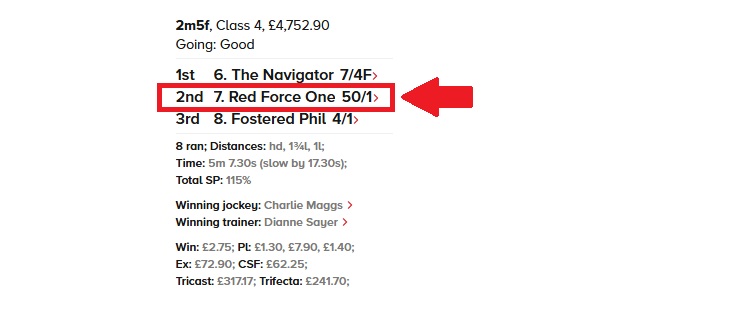
In this strategy, the dream result is your horse finishing a very close second. Why? Because this triggers the bookmaker’s refund on your cover bet while your lay bet on the exchange wins in full for a solid cash out position.
Since you placed a larger lay stake to offset the potential bookmaker win, the profit from the winning lay bet is substantial and uncontested.
This can yield a significant return, far exceeding the guaranteed losses from other outcomes. It turns the agony of a photo-finish loss into a calculated payday.
Overcoming the Risks and Variables
This approach is not without its perils. If your horse wins, you face a loss on the exchange that will likely exceed your winnings from the bookmaker. If it finishes third or worse, you lose the cover bet and only partially recoup from the lay side.
Success hinges on finding events with a strong favourite and a clear second-favourite, where the odds are stable and the potential for a predictable top-two finish is high. It demands a keen eye for market dynamics and strict stake management.
Place Your Cover Bet in Confidence
Ultimately, mastering the cover bet is a hallmark of the sophisticated UK punter. It’s a strategic pivot from blind optimism to calculated risk management. It offers a crucial layer of defence against the unpredictable nature of sports.
Whether deployed as an insurance policy on a favourite or as a nuanced tool within a matched betting framework, its core purpose remains the same. To protect your stake and your sanity.
By understanding its mechanics and recognising the right moments to employ it, you change a simple bet into a more controlled financial decision.
Related: Shots on Target Betting Explained – Rules, Opta Data & Settlement Disputes