

Most people assume there’s a secret system for picking winners…
However, in reality, professional bettors follow a strict set of rules that keeps them on the right side of the numbers. Only a tiny fraction of sports bettors (around 3–5%) end up profitable over the long run. This is exaclty why the bookies make so much money.
So in this article, we’ll take a look at them – to help you avoid going broke and maximise profits).
1. When a Perceived Loss is Actually a Win…
Amateurs feel compelled to have action on the day’s fixtures. The temptation of a packed Premier League Saturday can be irresistible. However, pro gamblers know that sports betting is a zero‑sum game: every bet has a positive, negative or neutral expected value.
While a neutral line bet might sound harmless, it’s still negative in practice because it wastes time and ties up bankroll. Professionals skip any bet without clear, quantifiable value instead of betting for the sake of it.
So here’s the key takeaway…
- Skip bad prices: Every time you pass on a poor line, you preserve capital for when genuine value appears. The restraint to not bet is a win in itself.
- Discipline beats excitement: Betting purely for entertainment is exactly why bookmakers make billions. Value opportunities are limited; don’t dilute your bankroll chasing action.
2. Bet Prices, Not Teams or Selections:
The urge is to obsess over who will win; but pros don’t do this. They obsess over whether the odds exceed reality. Finding a positive expected value is the foundation of professional betting. In laymans terms; positive expected value (+EV) means your potential payout outweighs the risk. Negative EV means that, over time, you will lose.
Imagine two evenly‑matched football teams. The “fair” odds on each should be 2.0 (evens). If a bookmaker is offering 2.2 on Team A, the implied probability is 45% when you believe the true probability is 50%. That 5% difference is value. Conversely, taking 1.8 on the same team (implied probability 55%) is a losing play over time because the price undervalues the risk.
Pro’s only back prices that exceed reality; they compare their estimated probability to the market’s implied probability and strike only when there’s an edge. They “forget the team, forget the player”, and focus on the price.
Important takeaway:
- Positive EV pays: Over hundreds of bets, +EV bets produce profit, while negative EV bets drain your bankroll.
- Calculate expected value: Use the formula (win amount × win probability) – (loss amount × loss probability) to check whether the odds offered beat the true odds.
- Shop around: The same game can have wildly different prices across bookmakers and exchanges. Having multiple accounts increases the chance of finding value.
Want to dig deeper? Check out our guide to arbitrage betting to see how value can be locked in across multiple books.
3. Staking Matters a Lot
Finding value isn’t enough; poor staking can blow up a good edge. Treat stakes as multipliers of value rather than emotional bets. Many use the Kelly Criterion, a formula that calculates the optimal fraction of your bankroll to stake when the posted odds differ from your estimated true odds.
This method maximises the long‑term growth rate of your bankroll…
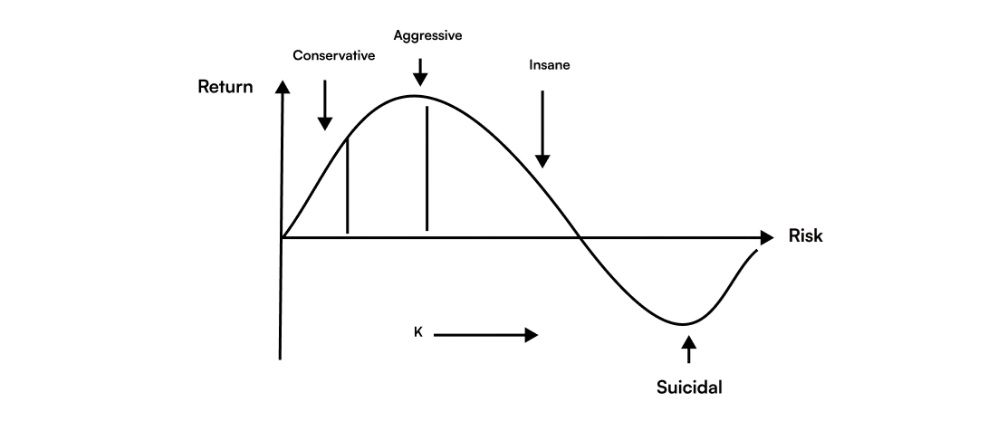
For example, if a bet has a 60% chance of winning at even money, the Kelly formula suggests staking 20% of your bankroll.
Bettors can adapt Kelly for sports bets: if you believe a money‑line price should be 55% when the book’s implied probability is 52.5%, Kelly recommends staking about 5.5% of your bankroll. Fractional Kelly (½ or ¼ Kelly) is often used to reduce volatility.
The important bits:
- Stake proportionally: Bet small when the edge is small and larger when the edge is significant. Random bet sizes destroy bankroll.
- Never chase losses: Going “all in” to recover a loss is a sure way to go broke. Your stake should reflect the bet’s value, not your mood.
- Consider Kelly: Using a Kelly‑based staking plan or a fractional variant helps maximise growth without risking ruin.
4. Exploit Inefficiencies
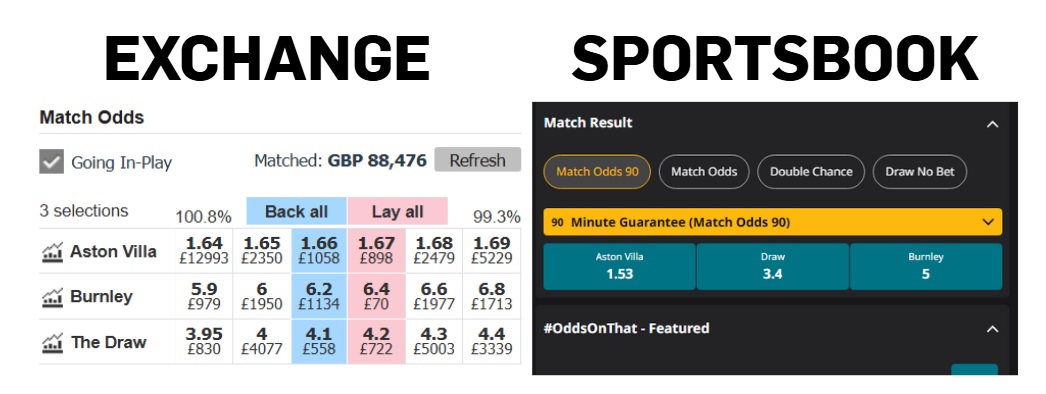
Pros don’t stick with one bookmaker. They know that small price differences compound over hundreds of bets. By comparing odds with Betfair’s exchange, they exploit slow price changes, promotions and mispriced markets.
Bookmakers build a margin (betting overround) into their odds. Exchanges operate on commission and often offer better prices. Sharp bettors maintain accounts with multiple firms to capture the best odds on each bet. Just take a look at this comparison below…
Best practices…
- to followShop around: Use exchanges like Betfair, Smarkets or Matchbook alongside traditional bookmakers to find the highest odds.
- Act quickly: Arbitrage and value opportunities disappear as lines adjust. The faster you react, the better the price you lock in.
- Play the long game: Tiny edges add up. A 2% better price might seem trivial, but over hundreds of bets, it can be the difference between profit and loss.
5. Build Repeatable Systems, Not Hunches
Scrolling through Twitter and listening to pundits for “hot picks” might feel exciting, but it’s gambling on emotion. Pros build logical, testable systems.
Arbitrage betting, pre‑race trading and matched betting are examples of systematic approaches based on maths and market dynamics. Value is theoretical – a fair coin toss can land on heads 20 times in a row, so pros track large samples to prove their edge.
Creating a system involve:
- Identifying an edge: This could be a model predicting horse‑race drifts, football price movements or undervalued markets.
- Testing: Simulate or paper‑trade your strategy to verify its edge over hundreds of bets.
- Refining: Adjust parameters, stake sizes and market selection to improve performance.
- Scaling: Only increase stakes after a large sample shows positive results.
Systems remove emotion and impose discipline. They’re not glamorous, but they’re how professionals make consistent returns.
If you’re new to systematic betting, our introduction to sports trading breaks down how to buy and sell positions on Betfair like a stock trader.
6. Respect Variance, Think Long‑term
Even with a profitable edge, losing streaks are inevitable. Variance is not failure; it’s part of the game.
Professional gamblers judge their performance over hundreds or thousands of bets, not a weekend. They keep spreadsheets, measure returns and stick to their staking plan through both winning and losing streaks. Hot streaks don’t make you a genius any more than cold streaks make your system broken. The law of large numbers only shows itself with large samples.
So it’s important to:
- Track results: Keep detailed records of every bet, including stake, odds and outcome. Analyse your hit rate and ROI over time.
- Avoid tilt: Don’t panic during a drawdown or get over‑confident during a heater. Your edge is proven over the long run.
- Think in seasons, not days: Judge yourself over weeks and seasons, not individual matches.
7. Treat Betting as a Business
Bookmakers are businesses; they operate on margins and data. Professional bettors do the same. They treat their bankroll as working capital, not gambling money. They track turnover, costs, profits and performance, and reinvest profits steadily. Betfair’s exchange, for example, operates like a market where traders enter and exit positions based on price movement. Pros approach it rationally, without adrenaline or fun; they care about ROI, not entertainment.
Consistently making money should not be fun…
Final Round-Up:
Sports betting isn’t about secrets or gut feelings. It’s about discipline, mathematics and sound money management. Following these seven rules won’t guarantee overnight riches (nothing does) but they will maximise your chances of becoming one of the small minority who consistently profit. Skip bad bets, hunt for value, stake intelligently, exploit inefficiencies, build robust systems, weather variance and treat your betting like a business. Do that, and you’ll be playing the same game as the pros.
Related: Sports Trading – The Comprehensive Guide to What, How and Why