
Wondering what “hedge your bets” actually means in gambling?
This simple guide explains it all; how hedging works, when to do it, and why it’s so useful.
We’ll also walk you through a real betting example with a calculator to show you how to reduce risk and lock in profits…
In today’s article, we will cover:
-
- What does it mean to hedge your bets?
- Why would you want to hedge your bets?
- The best hedging calculators you can find online
Hedging a bet means placing a second bet that reduces risk or locks in profit after the odds move in your favour.
Hedging Your Bets!
There will often be times in betting when you want to hedge your bets. Either to reduce your current liability or to lock in a profit no matter the outcome (If the odds have shortened in your favour)
It is common for bettors who like to back high odds bets, to hedge these bets for a profit when the odds are in their favour. Hedging your bets is very easy to do.
There are even calculators to help you figure out how much to bet.
A Hedge Betting Example…
Let’s look at a real hedge betting example using Premier League outright (something you’ll often find bettors doing when odds shift after a few games). This shows how a high-odds back bet can be hedged later using a lay bet to reduce risk or guarantee profit.
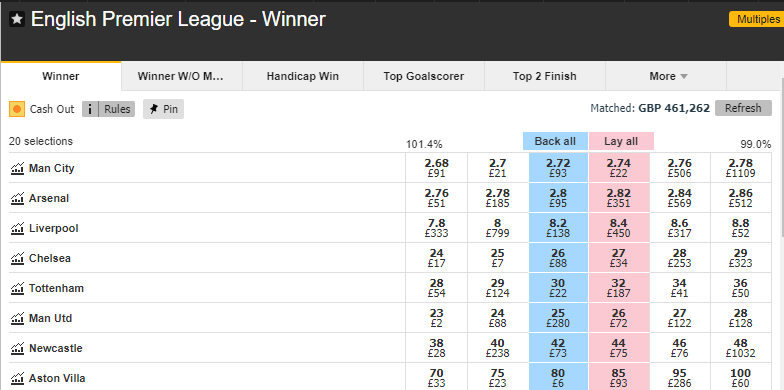
Hedging is the process of using a second bet to reduce exposure from an original bet.
Man City and Arsenal are the obvious favourites at the start of this season, with both teams being at similar odds. Outside of these two teams however, there are some big odds. If any of these teams were to get off to good start and for example, win their first five games. The odds would shorten significantly!
Especially if it was a team that was well-backed globally:
- Man Utd at odds of 25.00
- Newcastle at odds of 42.00
Both look appealing odds and have made some good moves in the market this summer. For the sake of this example, let’s say that we put £10 on Newcastle at odds of 42.00.
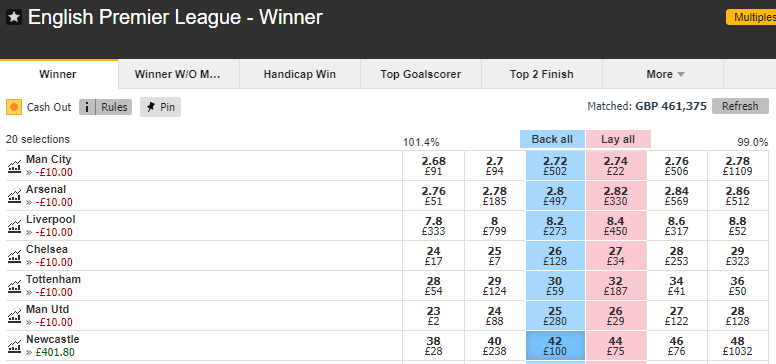
Our position looks like this at the start of the season. If Newcastle however, went on to win the first five games of the season and moved into odds of 18.00, this would enable us to hedge our position.
This would give us the following options:
- Back Newcastle at 42.0 for £10
- After five wins, lay them at 17.0 for £20
- Use a calculator to see exact hedge amounts
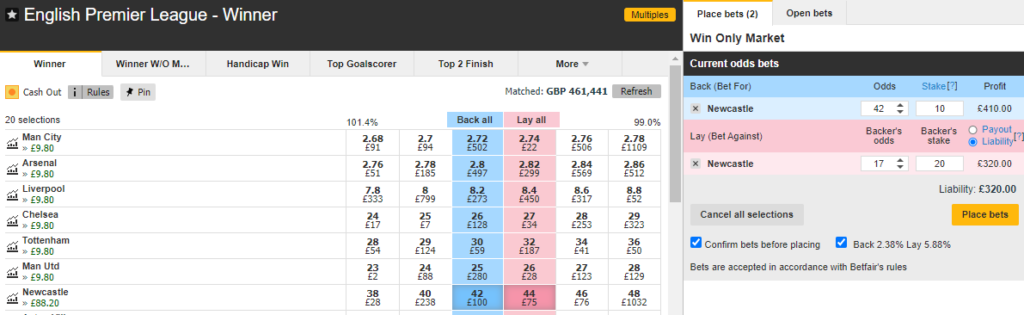
In the image above, we went with a hybrid approach. Locking in a guaranteed profit, however, leaving more money to be won should Newcastle win the Premier League. If the odds continued to shorten again, you hedge more across the other outcomes.
This was done by laying Newcastle (betting against them to win) at odds of 17.00 for a stake of £20.
If you are a sports bettor or trader who likes to take high odds, learning to hedge your bets is a great strategy. If you’re familiar with matched betting, this principle is similar – more on that here.
Both greatly reduce the usual volatility that you get with backing higher odds selections.
When Should You Hedge a Bet?
Hedging isn’t always the best move, but it makes sense when your bet has moved significantly in your favour or when you’re trying to protect profits. Many bettors hedge when:
– Odds shorten after strong performances
– A key player is injured
– A major result could affect the market
– They want to lock in some winnings before an event finishes
When You Shouldn’t Hedge a Bet:
- If you still hold strong value versus market price
- When hedging removes too much upside
- If the bookmaker margin makes the hedge expensive
Next, we look at how it’s done with an example…
How to Calculate a Hedge Bets Stake:
The formula to calculate the stake for hedging a bet is relatively simple:
- Determine the potential payout of your original bet if it should win.
- Find the odds of the opposite outcome.
- Divide the potential payout of the original bet by the odds available on the second bet.
This result is the recommended stake for the hedge bet on the alternate outcome.
Simple hedge stake formula:
Hedge Stake = Original Potential Payout / New Odds
Example: £420 payout ÷ 17.0 = £24.71 lay hedge stake
Hedging bets on the exchanges
When it comes to hedging bets on the betting exchanges, it is extremely simple. This is because you can place lay bets. Lay bets involve taking on liability should a selection win (basically acting as a bookmaker).
If you can back odds and lay them at lower odds, then you have a profitable hedge bet. The same can be said for laying odds at lower odds then you can back them.
Quick Answer: What Does It Mean To Hedge a Bet?
- Hedging means placing a second bet to reduce risk.
- You can hedge to lock in profit or cut losses.
- Most hedges happen when odds move in your favour.
- Formula: Hedge Stake = Potential Payout / Current Odds
Example: £10 at 42.0 returns £420. If odds drop to 17.0, laying part of that position can guarantee profit, whatever happens either way.
Hedge Calculator Example (How to Use It)
Use an online hedge calculator like this one to find the exact lay stake. Just enter your original bet, current odds, and the tool tells you what to lay. Super easy.
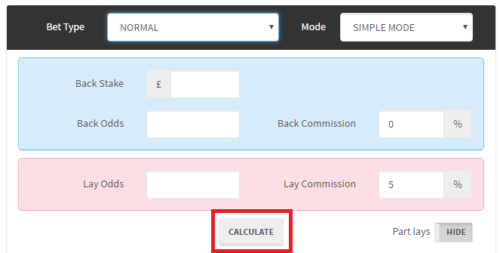
Best Hedging Calculators Online
When it comes to hedging a selection that you have made with an online bookmaker, you may want to use an online hedging calculator to help with your calculations.
Here are some of the best hedging calculators online:
Conclusion
Learning to hedge your bets properly is a crucial strategy to have under your belt if you want to bet successfully. It can enable you to take multiple high odds selections before an event starts with the intention of hedging your bets should the odds drop.
This is extremely useful for markets such as:
- Golf Tournaments
- World Cup and Euros
- Tournament Outright Markets
- Player Outright Markets
Additionally, if you’re manually trading on sports or arbitrage betting, then being able to hedge your bets most effectively is a key component to building your profits!
Related: Sports Trading on Betfair Explained