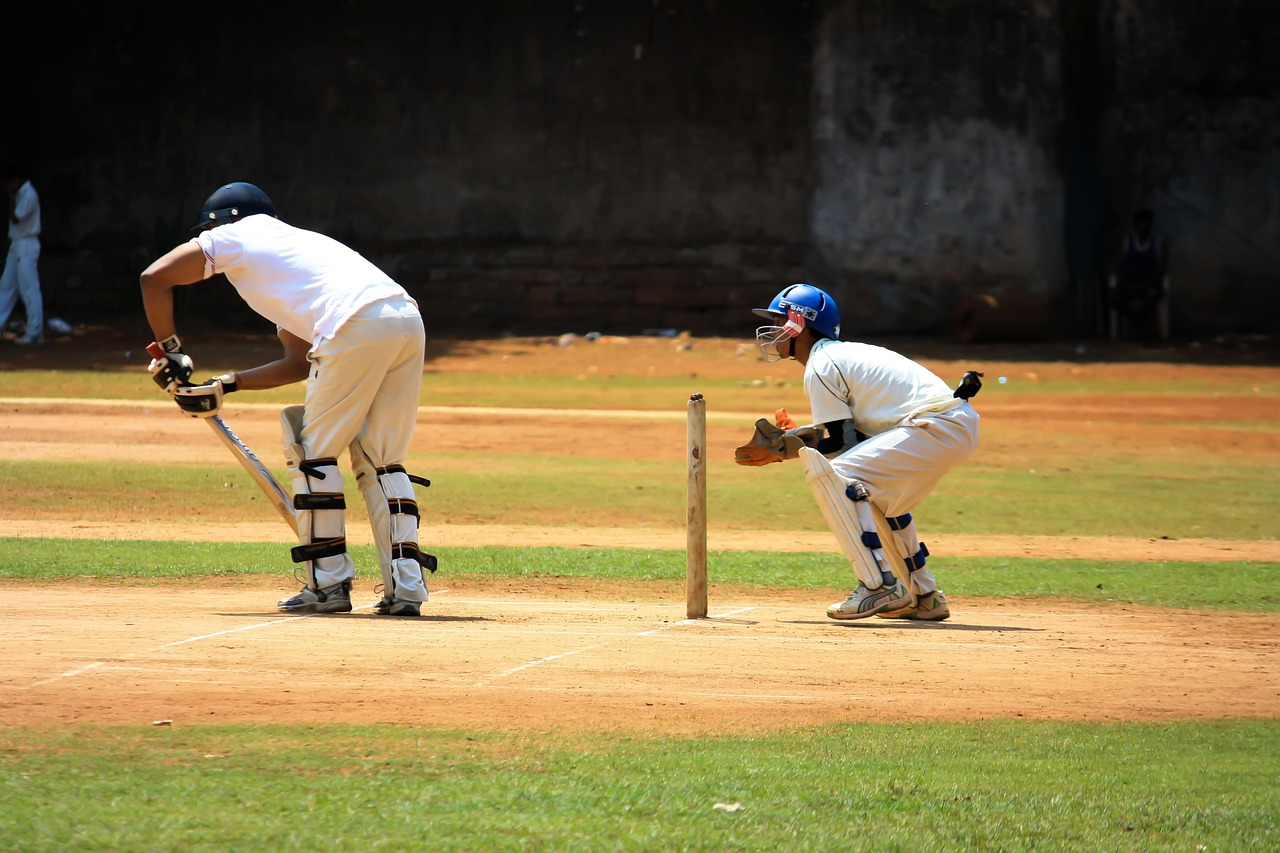
Cricket is one of the world’s oldest organised sports, but its origins are often misunderstood or oversimplified. While today the game is played by millions across India, England, Australia, and beyond, cricket began as a much simpler pastime in rural England.
In this article, we’ll explore where cricket began, the earliest recorded references to the game, how it evolved from a children’s activity into a professional sport, and how it spread across the world through British expansion.
By the end, you’ll have a clear, historically accurate understanding of the true origin of cricket — based on documented records rather than myth or speculation.
Origin of Cricket
What is the history of cricket? One of the most common ideas on how the game started dates back to the medieval time. According to history, many believe the game was a creation meant to serve as a children’s sport. But without accurate information about the game in the early years, we can’t say anything with 100% certainty. But one thing we’re sure about is that by 1611, cricket had gained more popularity and became an adult pastime.
The earliest reference to the game was in 1598, and it was called Crockett. This name suggests that it may have been derived from the Middle Dutch, which makes sense considering the strong trade connections between the County of Flanders and south-east England.
In the earliest versions of the game, boys are believed to have bowled a ball at a hurdled gate or tree stump, often within a sheep pen. The gate has two crossbars and uprights bars resting on the slotted tops. The entire gate is called the wicket, while the crossbar is called the bail. As for the ball, many believe it was a used stone, weighing about 5.5 or 5.75 ounces.
Similarly, the bat was the shape of branches of a tree which looks like a modern jacket stick. However, the cricket bat back then was considerably heavier and longer. As the bat evolved, it became shorter with a straighter head and a broader blade, making it easier to play cutting, driving, and forward shots.
Where Did Cricket Begin?
Most historians agree that cricket originated in south-east England, particularly in the counties of Kent, Sussex, and Surrey. The game is believed to have developed during the late medieval period, around the 13th or 14th century, as a rural pastime played by children.
Early forms of cricket were likely played by shepherds, using simple equipment such as a curved stick for batting and a gate or tree stump as the wicket. Over time, the game evolved into a structured sport and began attracting adult players by the early 17th century.
Snippet into the early years of the game of cricket
When you look into the early days of cricket, one place keeps coming to mind: England. One of the first significant occurrences in the game’s early days is the first definitive mention of the name, deduced from a court case in 1640 popularly referred to as the village cricket match.
Furthermore, the early years of cricket dates back to the 16th century during the Norman time. Though it was thought to be a game invented by children, it soon gained mainstream media attention when it was played as an adult game in 1611 by two Sussex men.
Another significant occurrence in the history of cricket was in 1744 when the first law of cricket was written. However, this law was amended in 1774 with innovations such as a 3rd stump, lbw, etc. The Star and Garter Club drew up the code and also became the custodian of the code.
How did cricket spread to the rest of the world?
When cricket started, it was generally popular in England. But today, it’s more prevalent in countries like India and Pakistan. The question now is how did this fascinating game spread to the rest of the world?
According to history, the game of cricket began to spread to the rest of the world during colonisation in the 17th century. When the English colonized North America, the game was introduced to the game together. Moving forward to the 18th century, the game was introduced to the rest of the world.
Cricket was introduced to the West Indies by the colonist. India is a nation colonised by the British East India Company mariner. Similarly, cricket was introduced to Australia after colonisation started in 1788. The game came to life in South Africa and New Zealand in the early 19th century.
Historical Sources and References
Much of what we know about the early history of cricket comes from historical court records, written laws, and later scholarly research.
Reputable sources documenting cricket’s origins include:
Conclusion
To summarise, cricket is no new game. It’s a game that millions have enjoyed for centuries. The game has a rich history of how it started, and since its inception, it has gathered several fans globally.
If you’re curious about how the game came to be, hopefully, this article broke things down in a simpler form. From who likely invented the game to how it spread to the rest of the world, it has been an interesting journey. Understanding the history of cricket can also help modern fans better appreciate the strategies, formats, and evolution of the game seen today.
Related: Cricket Trading Strategies: Pre-Match, In-Play & T20