Shots on target betting has become one of football’s most popular player markets, especially on Bet365 Bet Builders. But many punters still don’t fully understand what actually counts as a shot on target – until a bet is settled as a loser.
However, the boom has also sparked controversy…
Social media is full of punters angry at payouts being reversed or bets lost despite looking like winners. The issue lies in how “shots on target” are defined. Bookmakers such as Sky Bet, Bet365, and Betfair base settlements on third-party data (and that poses multiple issues).
A growing number of high‑profile misrecordings have sparked calls for greater transparency and better consumer protection. So in this article, we’ll cover the lot…
What Is a Shot on Target?
Official Definitions
The official definition used by Opta and most bookmakers is relatively simple. A shot on target is any deliberate attempt to score that would have gone into the net unless the goalkeeper or the last defender intervened.
This includes:
- Goals – any attempt that results directly in a goal counts
- Saved shots – if the goalkeeper stops a ball that would otherwise have gone in, it’s on target
- Last‑line blocks – if the final outfield defender blocks a goal‑bound effort, it a shot on target
Shots don’t count if they hit the post without a keeper’s touch, are blocked by defenders not on the line, or occur after play stops. In the UK, own goals also don’t count.
Why Intent Matters in Shots on Target Betting…
Opta’s definition relies heavily on the attacking player’s intent. For both shots and shots on target, the player must be making a clear attempt at goal; a mis‑hit cross that dribbles to the goalkeeper is not a shot. Because statisticians have to interpret intent, there is an element of subjectivity, especially when an effort is blocked immediately or deflected.
Common Shots on Target Edge Cases That Confuse Viewers:
- Saved crosses: If Opta judges the intent as a cross rather than a shot, it won’t count — even if the keeper has to save it.
- Deflections: A shot that takes a significant deflection may be logged as a block or pass, depending on intent.
- Rebounds: If a player shoots, it’s saved, then shoots again — only the second attempt may count.
- Free-kicks into the wall: Even powerful strikes can be logged as blocked shots if they weren’t goal-bound.
- Weak efforts: Shots lacking power may be ruled as passes if a teammate was clearly the intended target.
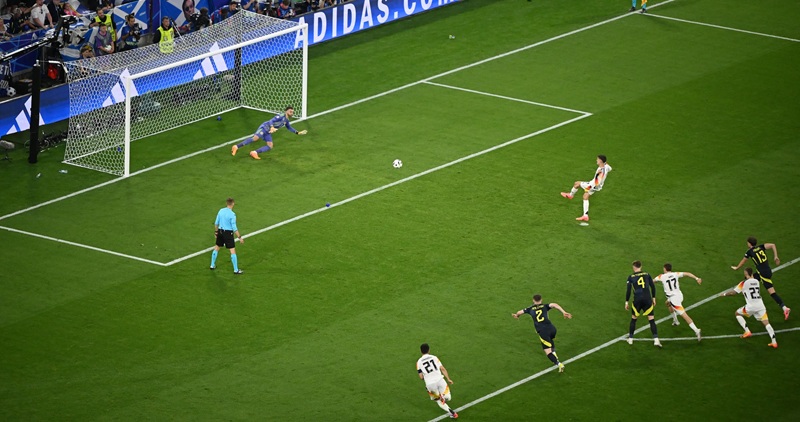
This subjectivity is one reason disputes arise.
One data provider may log a blocked free‑kick as a shot on target, while another may deem it a cross. Understanding how shots are classified can help punters anticipate the markets. It also explains why there can be honest disagreements about what happened on the pitch. Essentially, it’s another layer of prediction to worry about (as if predicting a first goalscorer or shot wasn’t hard enough already).
How Shots‑on‑Target Markets Work in Betting:
Bookmakers offer multiple ways to bet on shots on target:
- Player shots on target – you back a specific player (e.g. Kylian Mbappe to have 2+ shots on target).
- Team total shots on target – the number of on‑target efforts by one or both teams.
- Bet Builders – combining SOT lines with other markets such as goals, corners and cards.
- Specials – some firms even offer markets on headed shots on target or shots from outside the box.
While each bookmaker may have slight variations, most follow common rules…
- Only attempts that would have gone in if not for the goalkeeper or the last defender count.
- Goals always count as a shot on target.
- Bets are usually voided if your chosen player does not start or play.
- Settlements are determined using official data providers (typically Opta).
Because Bet Builders allow punters to combine many SOT selections with other events, the reliance on accurate data has become more important – and more problematic when the stats provider makes an error. This is probably the type of stuff you’ve seen on social media (I certainly have).
Why Bookmakers Rely on Opta Data:
Opta, part of Stats Perform, provides real‑time event data to leagues, broadcasters and sportsbooks worldwide. Operators such as Sky Bet, TalkSport Bet and Bet365 emphasise that they use Opta to ensure consistency in pricing and settlement. Opta markets itself as the gold standard for objectivity and claims that its data is collected by trained analysts and subjected to rigorous quality checks.

From a bookmaker’s perspective, outsourcing statistics to a recognised provider reduces the risk of internal error and allows them to offer complex markets such as shots on target, tackles and passes without having to collect the data themselves. In pre‑match and in‑play interfaces, some firms even display live Opta stats to help customers track their bets.
However, relying on a single provider creates conflicts of interest. Bookmakers pay Opta for the very data that decides whether bets win or lose. Customers cannot independently verify those numbers, and there is usually no way to appeal an incorrect recording. Because terms often state that Opta’s statistics are final, bookies can reject complaints by simply citing the provider.
However, in 2025, several sportsbooks have begun trialling secondary data verification through AI-powered tracking systems such as Hawk-Eye Live and Second Spectrum. These systems use ball-tracking and computer vision to verify Opta’s feeds in real time, helping reduce human subjectivity. While not yet industry-wide, early trials show promise. Potentially, it will pave the way for dual-provider verification in future.
Controversies: When Stats and Reality Differ
High‑Profile Errors
The biggest scandals in SOT betting involve high‑profile events that many fans watched live. Here are a few I’ve seen myself…
- Lionel Messi, 2022 World Cup – Messi’s free‑kick was saved by the keeper and headed goal‑wards, yet Opta did not register a shot on target; bets lost despite clear video evidence
- Kevin De Bruyne vs. Bournemouth (Premier League) – a direct free‑kick produced a goalkeeper save, but Opta logged no shot on target and bets were settled as losers
- Chris Wood (Chelsea vs. Nottingham Forest) – a shot initially recorded as on target disappeared from the live data minutes later, causing bookmakers to reverse payouts
These incidents show how quickly numbers can change in the live feed and how dependent settlements are on Opta’s real‑time data. Unlike win both halves betting and fixed markets, this can be a real problem for more subjective bets like SOT.
Sky Bet’s World Cup Messi Promotion:
Another widely shared case involves a World Cup promotion that went wrong. During the 2022 FIFA World Cup, Sky Bet boosted the odds for Lionel Messi to have two or more shots on target against Mexico after he recorded three against Saudi Arabia. The bet appeared a no‑brainer with barely anyone predicting a draw. However, when the match ended, many punters discovered that one of Messi’s efforts had been marked as a cross, not a shot.
See it for yourself in the video below…
Sky Bet refused to pay out, citing Opta’s ruling that the attempt lacked power and was intended as a cross. Supporters quickly pointed out that the ball was heading goal‑wards and required a save.
Screenshots from Sky Bet’s customer service show the operator telling customers that Opta had instructed them to grade the attempt as a cross due to the angle, lack of power and available targets in the box.
The situation highlights two problems:
First, the definition of a “clear attempt to score that would have gone into the net but for being saved” appears to be stretched when judgment calls are made about power or crossing intent. Second, as the video points out, Sky Bet and other bookmakers pay Opta for the data used to settle bets – creating the perception that they have a financial incentive to interpret ambiguous events conservatively.
When combined with the regulator’s reluctance to intervene, these factors leave punters feeling there is no independent arbiter. Check out the full video above!
The Mason Mount Case: A YouTube Example
Another on the channel illustrates exactly how misclassification affects punters (several years earlier). In a Premier League match, Mason Mount unleashed a powerful shot that goalkeeper Jack Butland saved. Live commentators described it as a certain goal if not for the save, yet Sky Bet graded it as no shot on target…
Sky Bet’s own definition (taken from its help page) states that shots on target include any deliberate attempt that would have gone into the net but for the goalkeeper or last defender.
Again, this case neatly demonstrates why punters feel there is a conflict of interest when bookmakers both purchase and rely on the data that settles their bets. Again, full clip above.
Data Disputes in the Press:
In April 2024, BBC News reported that the UK Gambling Commission would meet football betting operators after complaints about inaccurate stats. Examples included a Mo Salah shot marked off-target despite a save and a Jobe Bellingham tackle logged as a blocked pass. The BBC quoted data expert Dr Alireza Monajati, who noted that no data company claims 100 % accuracy and a 5 % error rate is to be expected.
IBAS, the UK body for betting disputes, handled nearly 300 data-related appeals in a year. Yet MD Richard Hayler admitted cases are rarely overturned since bookmakers’ terms rely on third-party data, leaving punters with little recourse.
During Manchester United vs. Arsenal, thousands of bettors claimed Bruno Fernandes’ 25-yard strike (parried away by Ramsdale) wasn’t logged as on target by Opta. The clip went viral on X, sparking debate about subjective calls and reigniting calls for a transparent appeals process.
Regulation and Complaints: What to Do If Your Bet Is Wrongly Settled
Start With the Bookmaker’s Complaints Process
If you believe your SOT bet has been wrongly settled, the first step is to contact the bookmaker. They must have a formal complaints procedure and should be able to review the event. Providing evidence such as match footage and explaining why the attempt meets Opta’s definition can sometimes lead to corrections, though bookmakers often defer to the data provider.
Alternative Dispute Resolution (ADR)
Under UK regulation, if you’re not satisfied after completing the bookmaker’s complaints process (usually after eight weeks), you can refer the dispute to an Alternative Dispute Resolution (ADR) provider. The Gambling Commission explains that ADR is a free, independent service that considers information from both you and the gambling business to settle the complaint. The bookmaker should tell you which ADR to use and may issue a “deadlock letter” confirming you can take the case forward.
However, ADR providers can only adjudicate contractual disputes; they cannot change bookmaker terms or force data providers to amend statistics. In practice, they rarely overturn results when terms specify that Opta’s numbers are final. As SBC News previously highlighted, there is currently no standard appeals mechanism to challenge data discrepancies. Because of this, there are calls for a Gambling Ombudsman to provide a clearer framework.
Practical Advice for Shots on Target Betting Disputes
- Document everything: Take screenshots of live stats, record video of the match and note the minute of the event.
- Check the rules: Read the bookmaker’s shot‑on‑target definition and market terms carefully; some may differ slightly.
- Be persistent: Escalate through customer support and, if necessary, raise the complaint to ADR.
- Know your limits: Disputed sums can be small compared to the time and stress of a complaint; decide if it’s worth pursuing.
Do Own Goals Count as Shots on Target?
No. In the UK, own goals never count as shots on target. The definition only applies to deliberate attempts by the attacking team.
What Happens if a Shots on Target Bet Is Wrongly Settled?
Your first step is always to contact the bookmaker. If the dispute isn’t resolved, you can escalate to an ADR provider such as IBAS. However, because most bookmakers state that Opta’s data is final, appeals are rarely successful.
Tips for Betting on Shots on Target
While settlement controversies grab headlines, shots‑on‑target markets can still be profitable if approached wisely. Here are some strategies:
-
- Player form: Back forwards or attacking mids who shoot often. Check sources like FBref or Opta for shots per 90 and accuracy.
- Opponents: Weak defences usually concede more on-target efforts.
- Tactics: Some sides share chances, others funnel them through one striker.
- Positions: A winger at wing-back will likely shoot less.
- Markets: Avoid defenders or deep mids; their shots are rare and harder to classify.
- Bookmakers: Terms vary — some void if a player goes off early, others settle differently.
- Responsibility: Treat SOT bets as entertainment; data errors mean there’s always risk.
Conclusion: The Need for Transparency and Fairness
Shots‑on‑target betting adds excitement and nuance to watching football, but the current system leaves bettors at the mercy of a single data provider…
High‑profile mistakes show that misrecordings can and do happen, and the appeals process is limited.
Until the rules become more transparent, punters should assume there is a layer of subjectivity in every shots-on-target market. If you’re betting these lines on Bet365, Sky Bet or Betfair, you’re not just predicting the shot – you’re also relying on how Opta classifies it. That matters more than most people realise.
Related: William Hill Account Restriction Problems: How to Proceed