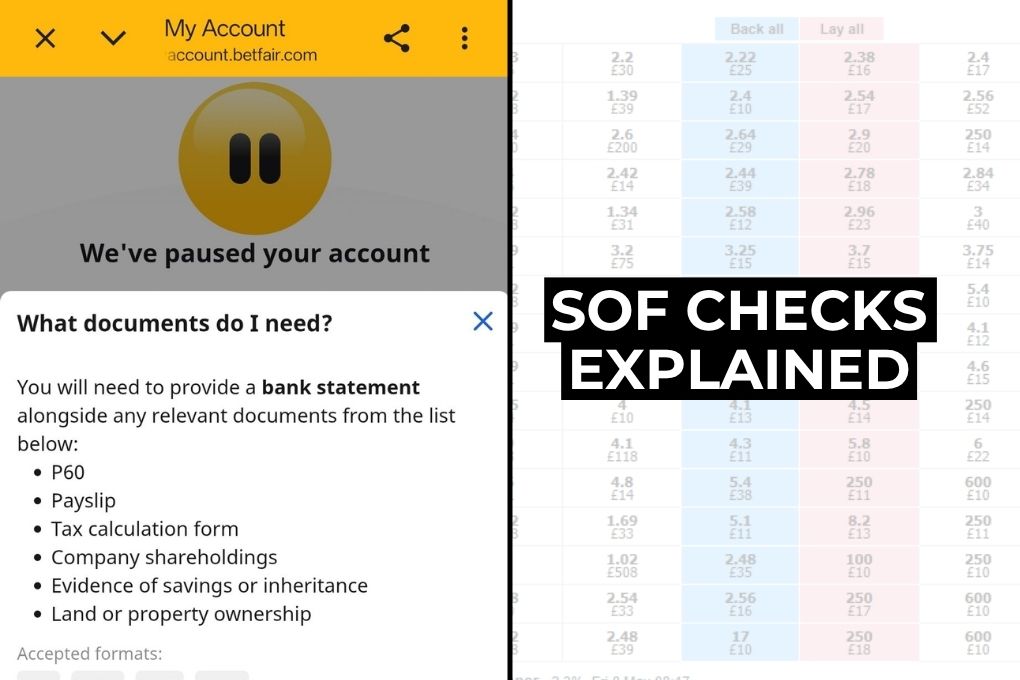
A source of funds check is an AML process used by bookmakers to verify that deposited money comes from legitimate sources.
Unlike betting KYC checks or affordability checks, source of funds checks focus specifically on where your gambling money originated.
Large deposits, unusual withdrawals or suspicious betting patterns usually trigger these checks. Bookies may request financial details, but they should only ask for relevant info.
Quick Answers: What You Need to Know
- Why am I being asked for documents? Operators request documents to verify that gambling funds come from legitimate sources.
- Is this an affordability check or an AML check? Source of funds checks are AML checks, not affordability checks.
- What can be requested? Bank statements, payslips or proof of savings may be requested. Relevant details can usually be redacted.
- Do I have to comply? No, but refusing checks may lead to account restrictions or closure.
- How long do checks take? Some checks are instant, while manual document reviews can take several days, depending on complexity.
- Your rights: Operators should only request relevant information and should not delay withdrawals unnecessarily.
Source of funds checks catch a lot of bettors off guard, especially after a big win. Being asked for bank statements and financial data feels intrusive, particularly when the process is poorly explained. So in this article, I’ll explain what source of funds checks are, how they differ from other verification checks and what you can do to reduce delays and frustration.
What is a Source of Funds Check for Gambling?
Source of fundschecks are used by bookies to verify where gambling money comes from. They are part of anti-money-laundering (AML) rules and are usually triggered when an operator thinks a customer is an elevated risk.
In practice, this means a bookmaker may ask for bank statements, payslips or proof of asset sales to confirm the origin of a deposit. The checks themselves focus on the specific money being used for gambling. Source of wealth checks are different – they look more broadly at how a person built their overall finances over time.
Why Do Bookmakers Perform Source of Funds Checks?
Keeping crime and money laundering out
Bookmakers are legally required to prevent their platforms from being used for money laundering or other financial crime. To do this, operators monitor customer activity, review transaction patterns and sometimes request financial documents…
Regulatory obligations and licence conditions
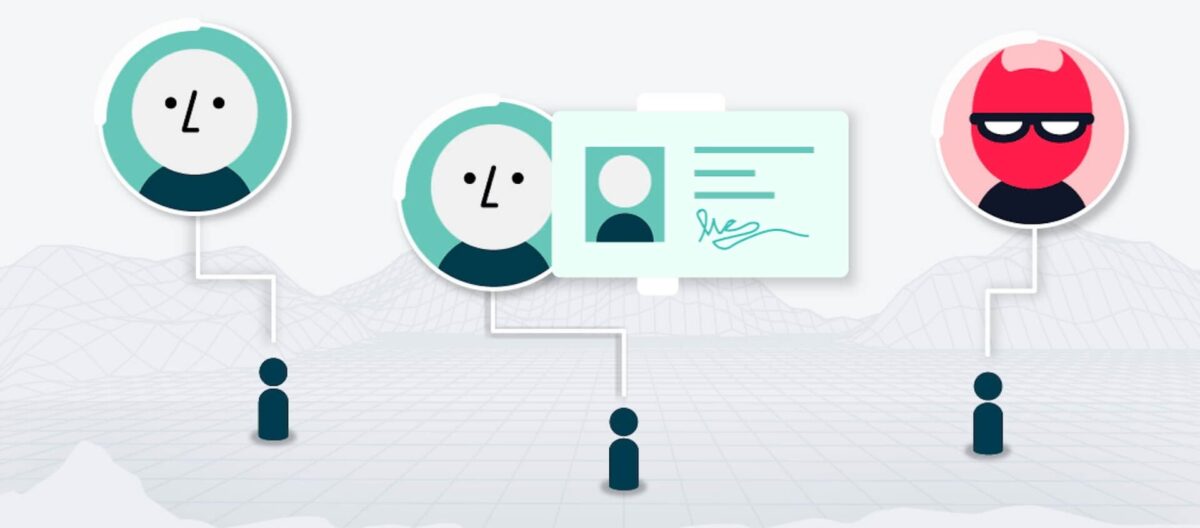
UK gambling operators must verify a customer’s identity before allowing them to gamble online. They are also required to monitor transactions and carry out source of funds checks where activity appears unusual or higher risk. Operators should explain what documents may be required and should not delay withdrawals for checks that could reasonably have been completed earlier.
Risk‑based Triggers for SoF:
Source of funds checks are usually triggered by risk factors rather than random checks. Higher-risk customers, politically exposed persons and users linked to high-risk countries are more likely to face additional verification.
In gambling, typical triggers include:
- Large or unusual deposits or withdrawals – especially if they exceed your normal betting patterns.
- Frequent transactions from e‑wallets or third‑party accounts, which obscure the origin of the money.
- High‑risk behaviour such as sudden spikes in stake size, cross‑platform transfers or multiple account usage.
- Regulatory red flags such as PEP status or residence in a high‑risk jurisdiction.
Operators also compare deposit and loss levels against publicly available income data to identify potentially risky gambling behaviour. Customers with unusually high spending may trigger additional financial risk checks, although these are separate from source of funds checks and are still being trialled.
What Documents Can Bookmakers Actually Request?
Bookmakers can request documents that show where your gambling money came from. This may include bank statements, payslips, proof of savings, inheritance documents or evidence of asset sales. In simple terms, the documents should explain how the money was obtained…
For example:
- Salary: bank statements and payslips showing regular income.
- Savings: statements of savings or investment accounts.
- Asset sale: a sale contract and bank statement showing proceeds.
- Inheritance or gift: a probate document and bank statement showing receipt.
- Business income: company registration documents, shareholder records and statements reflecting dividends.
The regulator does not require specific document types or fully unredacted statements. The companies themselves decide what evidence is sufficient for their checks.
If you want to protect your privacy, you can usually redact unrelated transactions or sensitive information, provided the important details remain visible.
Source of Wealth vs. Source of Funds Compared:
Source of wealth checks look at how a person built their overall wealth over time. This can include salary, business income, inheritance, investments or property sales.
These checks are usually reserved for higher-risk situations where normal source of funds checks do not fully explain large transactions. For example, a bookmaker may request HMRC tax returns or proof of asset sales if a customer is depositing unusually large sums.
Are Bookmakers Allowed to Ask For This? What Are Your Rights?
Legality and regulatory backing
Gambling operators are legally required to verify customer identity and monitor for money laundering risks. They are also allowed to request additional information where needed for AML compliance or other regulatory obligations.
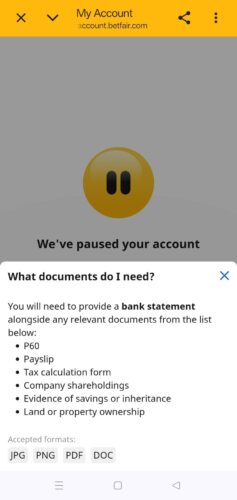
The UKGC has confirmed that operators do not need fully unredacted documents for compliance checks. You can usually hide unrelated or sensitive information, provided the important details remain visible. Brands should also explain what documents they may require and why they are being requested in the first place.
Can I refuse to provide documents?
You can refuse to provide proof of funds, but bookmakers may then restrict or close your account because they cannot complete their legal compliance checks. In practice, refusing documentation often results in withdrawal delays, betting restrictions or account suspension. This should not to be confused with companies spotting palpable errors or clamping down on winners.
Do they need to verify my identity before a withdrawal?
Yes. UK operators are expected to verify your identity before allowing you to gamble, not only when you try to withdraw funds. However, bookmakers can still request additional information at the withdrawal stage if new AML or compliance concerns arise.
Enhanced Due Diligence (EDD) Explained Simply For Punters…
Standard due diligence covers normal KYC and identity verification checks. Enhanced due diligence is used for higher-risk customers, large transactions or situations that present increased money laundering risk.
In gambling, EDD often involves deeper source of funds or source of wealth checks, particularly for customers linked to high-risk countries.
Examples…
- More extensive document requests (e.g. multiple years of bank statements or tax returns).
- Verification of asset ownership or business interests.
- Detailed questions about the purpose of transactions and the relationship between parties.
- Ongoing monitoring of activity and additional checks on associated persons.
EDD is not meant to punish customers; it is a regulatory requirement designed to mitigate the higher risk of money laundering or corruption associated with certain profiles. While intrusive, these checks protect both the operator and legitimate customers.
Top Tips to Navigate Source of Funds Checks
- Keep records: Save clear records of income and gambling activity in case documents are requested later.
- Avoid unusual deposit patterns: Sudden large deposits or frequent e-wallet transfers can trigger checks.
- Ask questions: Operators should explain what documents they require and why.
- Use licensed bookmakers: Regulated operators must follow AML and data protection rules.
- Know your rights: You can refuse checks, but this may lead to account restrictions or closures.
FAQs
Are source of funds checks the same as affordability checks?
No. Source of funds checks verify where the money you are using to gamble came from. Affordability checks (also called financial risk assessments) aim to identify whether a high‑spending customer is in financial difficulty.
Can I refuse a source of funds request?
You can refuse to provide documents, but the bookmaker may restrict or close your account if it cannot complete its compliance checks. While you are not legally forced to comply, verification is usually required to continue betting or withdrawing funds.
What if I only want to withdraw my winnings?
Bookmakers may need to verify your identity and source of funds before paying large withdrawals. However, they should not delay withdrawals for checks that could reasonably have been completed earlier.
Are redacted documents acceptable?
Yes. The UK Gambling Commission does not require fully unredacted documents for verification checks. In most cases, you can hide unrelated transactions or non-essential personal information.
Do financial risk assessments affect my credit score?
No. Proposed financial risk assessments are not designed to affect your credit score. They are intended to be low-friction checks aimed at identifying unusually high levels of gambling spend.
My Verdict: Source of Funds
Source of funds checks can feel intrusive, but they are designed to prevent financial crime and protect the gambling industry from abuse. Understanding the difference between KYC, source of funds and affordability checks can help you avoid confusion and reduce delays.
Operators must verify customer identity, explain what documents are required, and handle your data responsibly. You also have the right to question excessive requests and protect sensitive personal information where appropriate.
Related: Positive EV Betting: The Only Math That Actually Matters